Blog

On Fear

I’m not afraid when I travel alone, and I haven’t been for a very long time.

The view from Mount Rysy (photo credit: author)

“Were you afraid?” As a solo traveler, it’s inevitably the question I’m asked when I return from a trip and tell friends, colleagues, and family about my recent adventures. Sometimes the phrasing varies. Instead of leaving open the possibility that I’m fearful, the asker might assume it: “Weren’t you afraid?” It doesn’t matter if I’ve spent three weeks in Budapest, or two hiking remote Icelandic trails. The question is always the same.

My answer now is, like the question, always the same. “No.” I wasn’t afraid.

This wasn’t always the case. When I first began traveling, in my early 20s, I spent much of my trips terrified. I remember my first time in Munich I stayed huddled in the hostel after dark, reading Lord of the Rings — and not because I enjoy lengthy descriptions of hobbit breakfasts.

But generally speaking, I’m not afraid when I travel alone, and I haven’t been for a very long time. That people consistently ask me if I am, or was, makes me wonder what I might be missing. Am I oblivious to potential dangers? Am I too trusting, too naive?

Part of the reason people ask if I’m afraid is because I’m a woman. This irks me, but I also know their concerns are merited. Women, or non-binary individuals who might be perceived as women, could face more risks when traveling, especially alone. To this day, before I leave for any trip, my mother will caution me not to leave the hotel by myself for any reason (advice which I never follow.)
A view I couldn’t get from my hotel room (photo credit: author)

But on a broader scale, there are inherent risks in traveling that everyone faces, from the irritating (petty theft) to the tragic (terror attacks). These dangers are present everywhere, but travel — to a place we likely don’t know, where we might be more dependent on the help of others — renders us particularly vulnerable.

The odds, so far, have been in my favor. I was only ever almost robbed once, when I was a student in London and I caught a sloppy young thief attempting to stick his hand in my bookbag (had he succeeded, the only thing he would have gotten was a handful of colorful pens). With regards to gender, the worst things I’ve experienced have been catcalls, and even these were usually more flirtatious than lewd or menacing — and never in countries like Italy, Morocco, and Turkey, where I’d been warned I’d experience non-stop harassment.

By far the most worrisome incident I’ve encountered when traveling happened this past January when I was in Bosnia. Police evacuated the airport for a possible bomb threat just as I was departing customs. I’d somehow missed the yellow police making off a large quadrant of the arrivals hall in my search for an ATM. (In my defense, the police didn’t seem that concerned with the evacuation — they let me extract my money before shooing me outside, along with other straggling passengers).

I know I’ve been lucky that my brushes with potential troubles have been mild, and that my experiences don’t reflect everyone’s. But even when things go south, it’s not fear I experience — annoyance, irritation, concern, but rarely fear.

The times I am fearful usually occur when I’m hiking. I don’t do anything technically challenging, remote, or even very lengthy — Cheryl Strayed on the Pacific Crest Trail I am not — but I’m not always good at recognizing warning signs. I hiked the Kumano Kodo pilgrimage route in Japan completely alone and at the start of the monsoon season, which meant that two of my five days on the trail were spent trekking for hours in downpours — and in running shoes, not hiking boots. As much as I loved being on the trail, even in the rain, I was terrified that each step I took would result in a broken limb.

The Kumano Kodo in the rain. Beautiful but spooky (photo credit: author)

Even when I go prepared, the idea of stepping out into the wilderness can be daunting. I hiked the popular Laugavegur through the Icelandic highlands in 2021 and, although there were many others on the trail, the long, lonely stretches through volcanic hills and around glaciers meant that I often didn’t see anyone for miles — probably the first time I had ever been truly alone in my life.

At the summit of Mount Rysy in Slovakia’s Tatra Mountains, where I was bundled up in waterproof gear, the cloud cover was so dense I couldn’t see beyond my boot-clad feet dangling over the ledge.

The Tatra Mountains, Slovakia (photo credit: author)

But even in the moments when I’m scared, I keep going. I inch myself down from the fogged-in summit. I walk to the next trail marker. I take things, literally, step by step. It’s the only good choice I have.

Why Visiting Istanbul is My New Year’s Resolution

I won’t lie. My first day in Istanbul I sat in the outdoor cafe at the Topkapi Palace sipping hot chocolate and taking endless, alternating photographs of the European and Asian sides of the Bosporus: Europe, Asia. Europe, Asia.

Europe … and Asia (photo by author)

To be fair to myself, I was recovering from jetlag and I had never before seen, let alone been to, Asia. I was completely taken in by the city’s East-meets-West sparkle — or at least the idea of it. I traveled to Istanbul in February of 2015, almost exactly one year before the failed military coup that would result in President Recep Tayyip Erdogan solidifying his strongman’s hold on power. Not quite a golden age for the city, or for Turkey — the country had already been in the grips of authoritarian power — but before things got really bad.

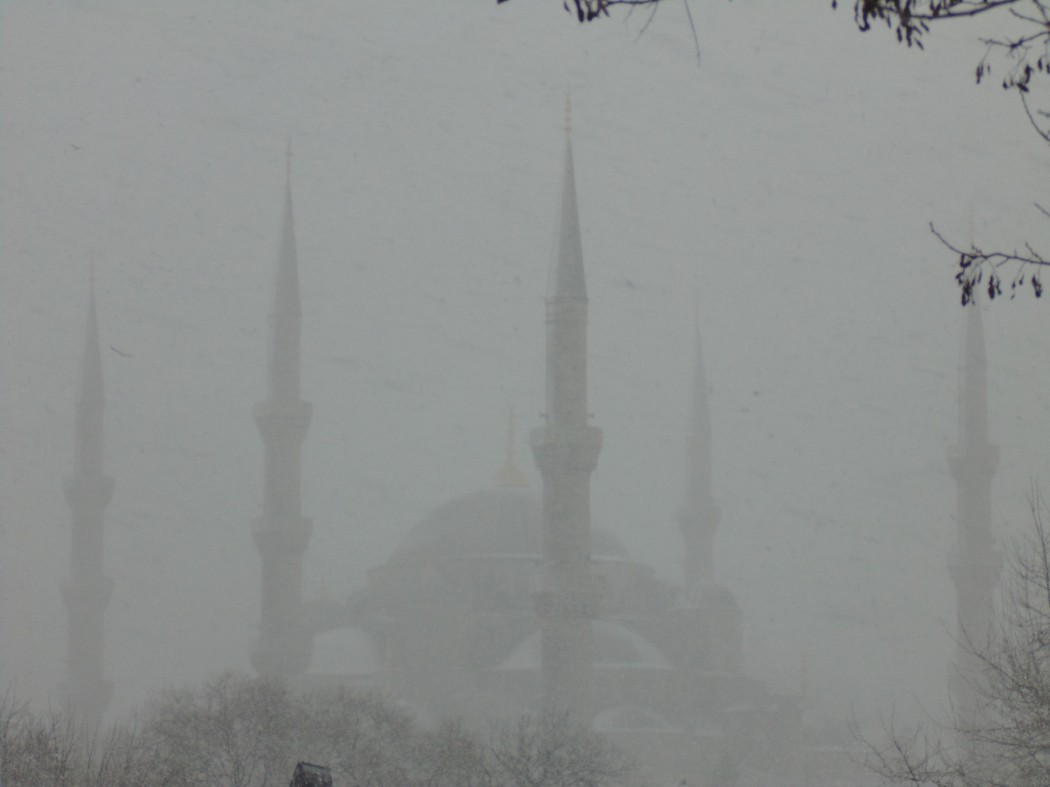
A sudden blizzard blurs the view of the Hagia Sophia (photo by author)

I’d wanted to visit Istanbul since coming across a paperback copy of Orhan Pamuk’s exquisite memoir, Istanbul — a love letter to his complex city — at a library in the early 2000s. I’d purchased my ticket on a whim thanks to a sale on Turkish Airlines. I booked a room in a small hotel in the shadow of the Blue Mosque, where the proprietor kept a blanket and water bowls out for the stray dogs who patrolled the street. I’d read Pamuk’s book at intervals between touring the city’s mosques, the spice market, and Grand Bazaar.

The Grand Bazaar (photo by author)

As a tourist with limited experience traveling outside of North America and Europe, it was nearly impossible for me to not be entranced by the very things Western tourists (or at least those of us coming from a Judeo-Christian background) find enchanting. So I ticked off the tourist to-do list. The Blue Mosque, Hagia Sophia, and Topkapi Palace I did in a whirlwind morning/afternoon, and I capped off the evening with a Turkish coffee in the Grand Bazaar. Another day, I took the tram to Taksim Square and strolled along the famed Istiklal Caddesi in a blizzard. On my last day, I took the ferry across the Bosporus to Istanbul’s Asian shore before traveling onward to Kusadasi, on the western coast of the Aegean.

Istiklal Caddesi (photo by author)

As a traveler, I’m always caught in an impossible bind: my purpose for traveling is to gain greater insight into other parts of the world — as it is for many travelers — and yet, as a traveler, any insight I gain is inevitably limited by my perspective as an outsider. For starters, it’s far too easy to get sucked into the glitz and spectacle of sites which the former history major in me craves. But even if I were to spend a week, a month, or a year in any new place, how much would my outsider’s perspective really change?

It’s a contradiction I feel whenever I travel, wherever I travel, but I felt it more distinctly when in Istanbul. Until going to Turkey in 2015, most of my travels were confined to Western Europe — rooted more predominantly in the “Western” and Christian traditions, which aren’t all that dissimilar to the traditions with which I grew up in the United States. The closest I’d gotten to anything different was in Spain, where the Islamic culture that once flourished has since been subdued by Roman Catholicism.

But in Istanbul, I was all too aware that I was seeing the city, as Pamuk might write, as a Western tourist: as the romantic (and exoticized) East, the former Ottoman counterpart to the European West, Christianity’s lost Constantinople infused with a new life.

Yet there was more to it than that. I genuinely liked Istanbul, beyond its obvious and spectacular highlights. In fact, what stands out to me about the city were its smaller, mundane moments: a waiter on the Bosporus ferry gracefully taking tea to passengers, smiling when the chop caught him momentarily off-balance; a fishmonger in a market who kept heaps of scrap aside for a hungry tuxedo cat; young adults who broke into impromptu snowball fights as a blizzard turned into fat, fluffy flakes.

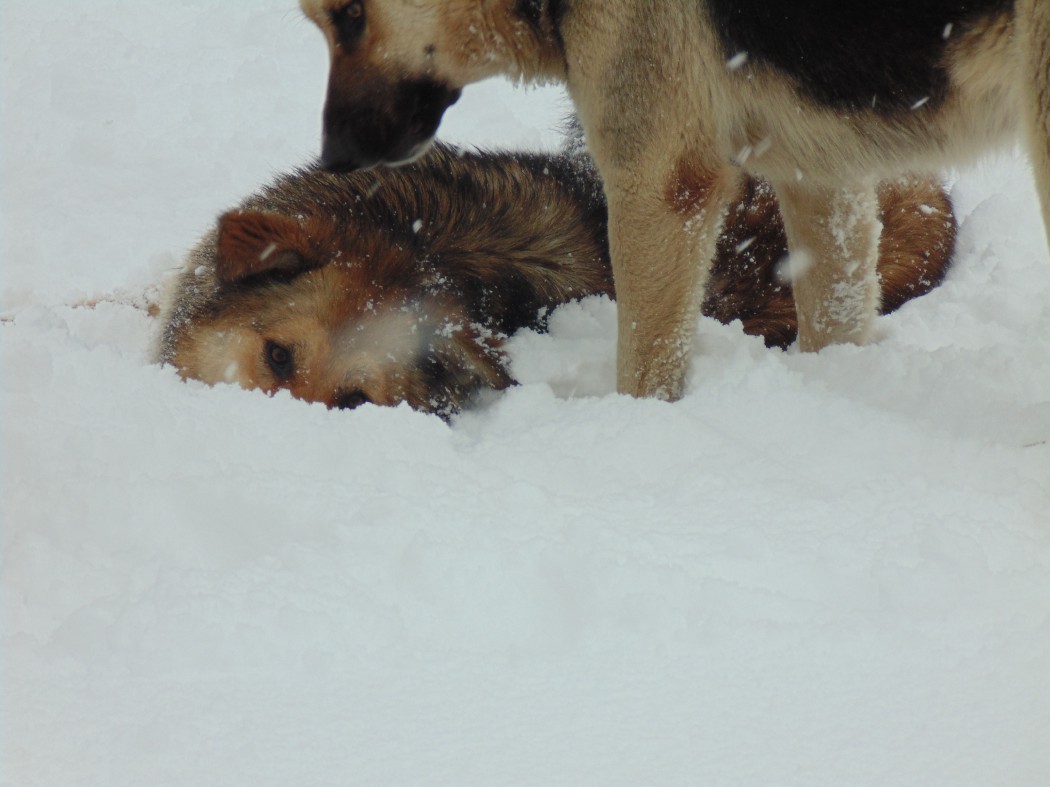
In the blizzard, even the stray dogs were playful (photo by author)

I’ve not been back to Istanbul since. There were just too many reasons not to go: marriage, cats, Covid. Life intervened. Plenty of other cities, other countries to travel to. Plus, since the coup, Erdogan’s hold on power has only increased. The State Department lists Turkey under a Level 2 advisory, warning against the possibility of terrorist attacks (which, let’s be honest, can and do happen anywhere) and arbitrary detentions of foreign nationals. I’m not a fearful traveler but, as a writer, the latter does give me pause.

Snow people popped up throughout the city (photo by author)

But that trip to Istanbul did convince me that I need to travel deeper. That I can’t just collect countries as stamps in a passport and be done with it. I need to go beyond my natural inclination to see the world as a tourist — not that I can’t be a tourist, but that I need to step more outside of my comfort zone.

Which is why my resolution for 2023 is to revisit Istanbul, without expectations, and without an agenda. Okay, so I have some agenda. I would like to revisit the Hagia Sophia, which, since my last visit, has been transformed back into a mosque by the Erdogan government — although what I’m really interested in is whether or not the family of cats who called the former museum home, and who were cared for my its workers, are still allowed on the premises. I would also like to learn more about the Sufi Dervishes, specifically the women Dervishes who are pushing the boundaries of gender limitations. And I would like to visit Bigudi, one of the city’s few queer venues, which provides a safe haven for Istanbul’s queer folks and allies in an increasingly homophobic society.

But mostly, I just want to see where the days take me.

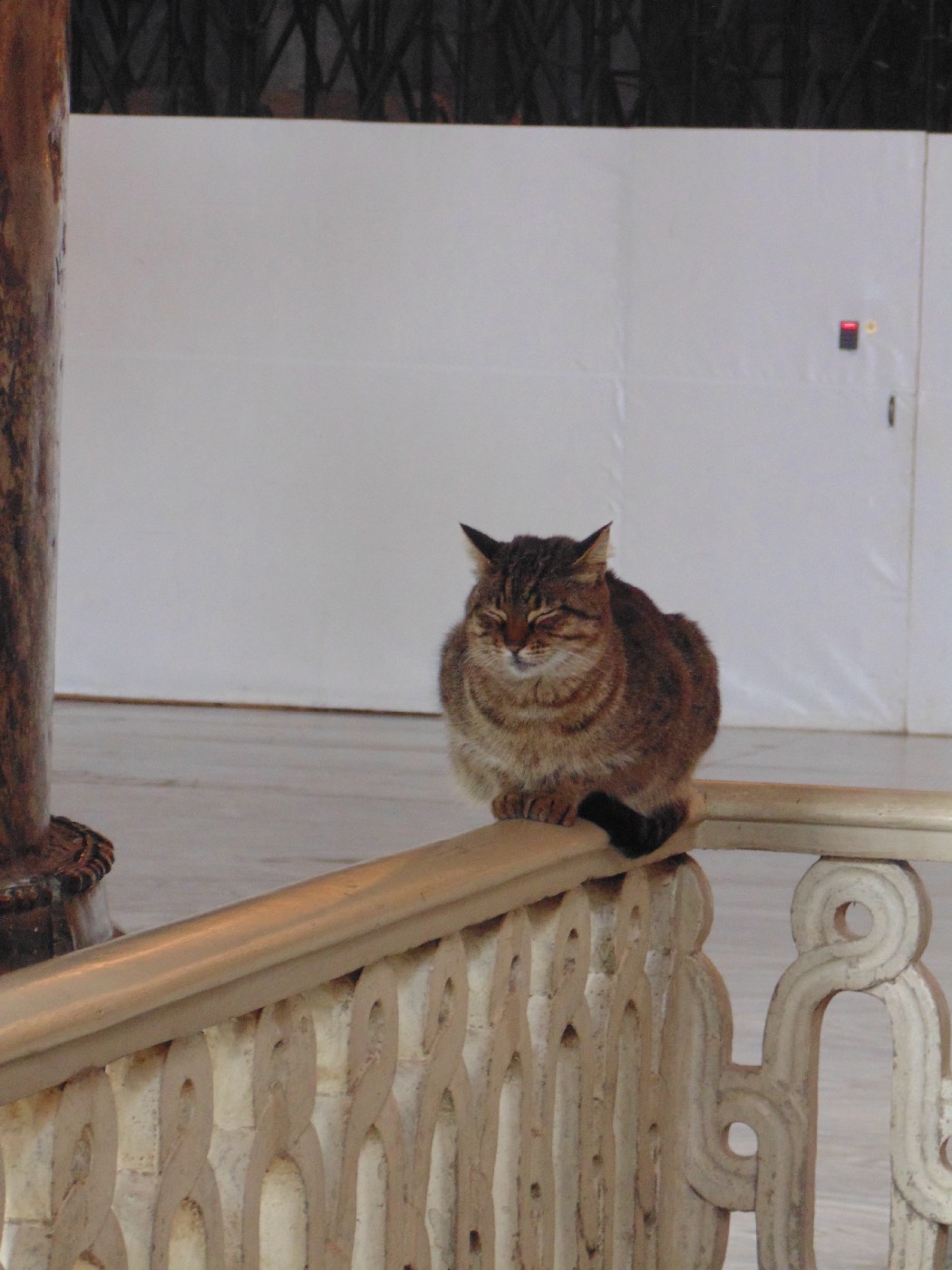
Gli, who lived in the Hagia Sophia until her death in 2020 (photo by author)

If you like this story, you can follow me (@robinjkish) on Medium and on Instagram!

Mostar: City of Bridges — and Divisions

A sign at the toll entrance to the motorway wished our bus “Good Luck” as we headed south from Sarajevo and over the mountains to Mostar, in Herzegovina. A somewhat ominous way of wishing us a pleasant journey, but fortunately no luck was needed. The road was perfectly smooth and safe, climbing hairpin turns into the craggy mountains and running parallel to the ice-green Neretva River.

The road to Mostar passes through craggy (and misty) mountains

The region of Herzegovina — and the part of the country’s name that often gets dropped off for brevity’s sake — lies to the south of Bosnia, butting up against Montenegro to the east and Croatia and the Adriatic to the west. The largest city is Mostar, a popular daytrip for tourists from Sarajevo or Dubrovnik in the summer months. Its crowning jewel for visitors is the Stari Most, a sixteenth-century Ottoman bridge that bisects the city’s picturesque old town and connects the Croat-populated neighborhoods on the western bank of the Neretva to the Bosniak-populated neighborhoods in the east.

Mostar’s top attraction is the Stari Most

The original bridge, considered one of the best-preserved examples of an Ottoman model, had been destroyed by Croat forces during the middle years of the civil war. It was later reconstructed thanks to foreign donations and reopened in 2004.

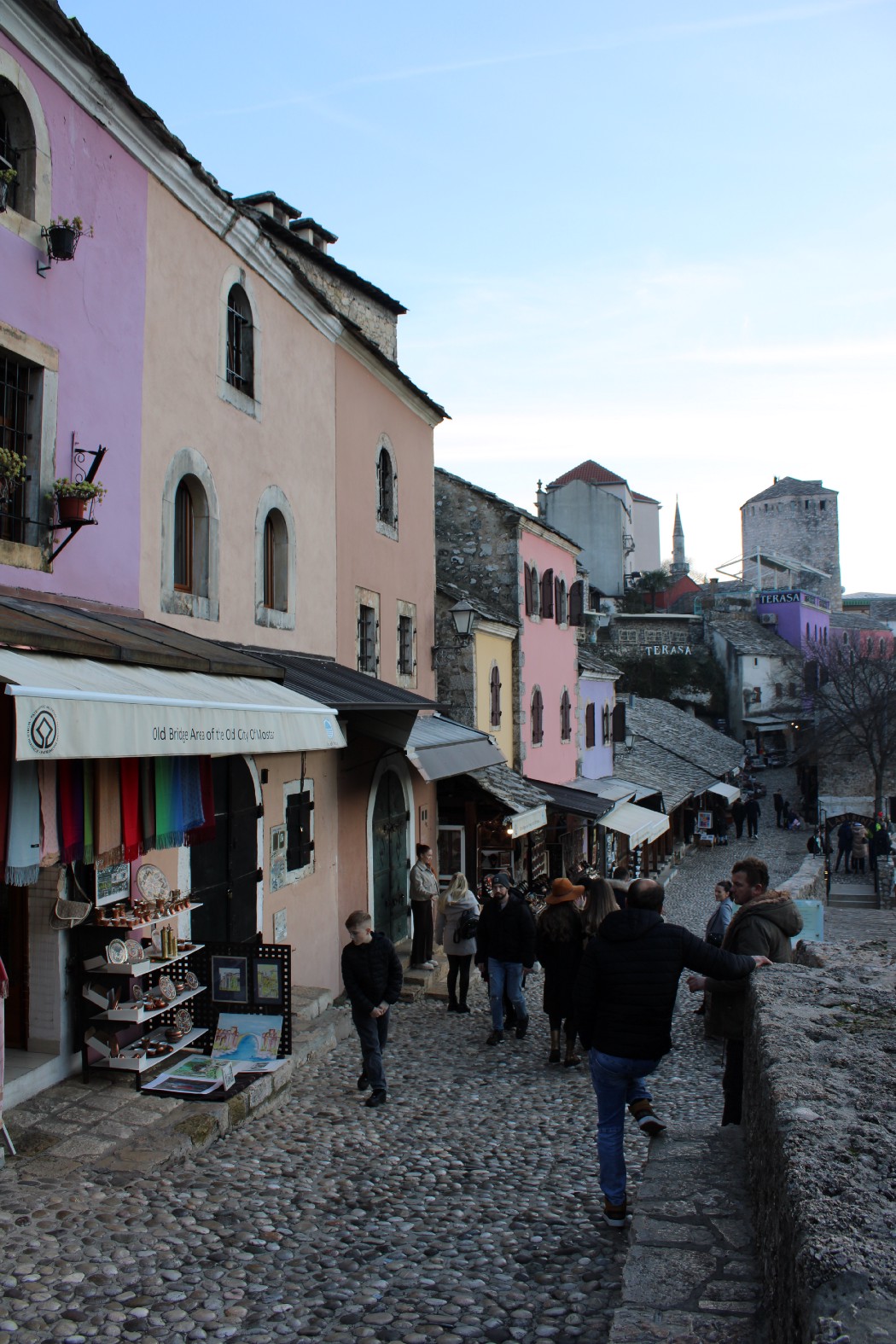
The old town, Mostar

In the jam-packed summer months, I was told by just about every local I spoke to, crossing the bridge could be a twenty-minute ordeal. Since I was visiting in January, the crowds were thankfully smaller — although the city’s entire tourist population still seemed to concentrate itself on the bridge for the obligatory group photo or selfie.

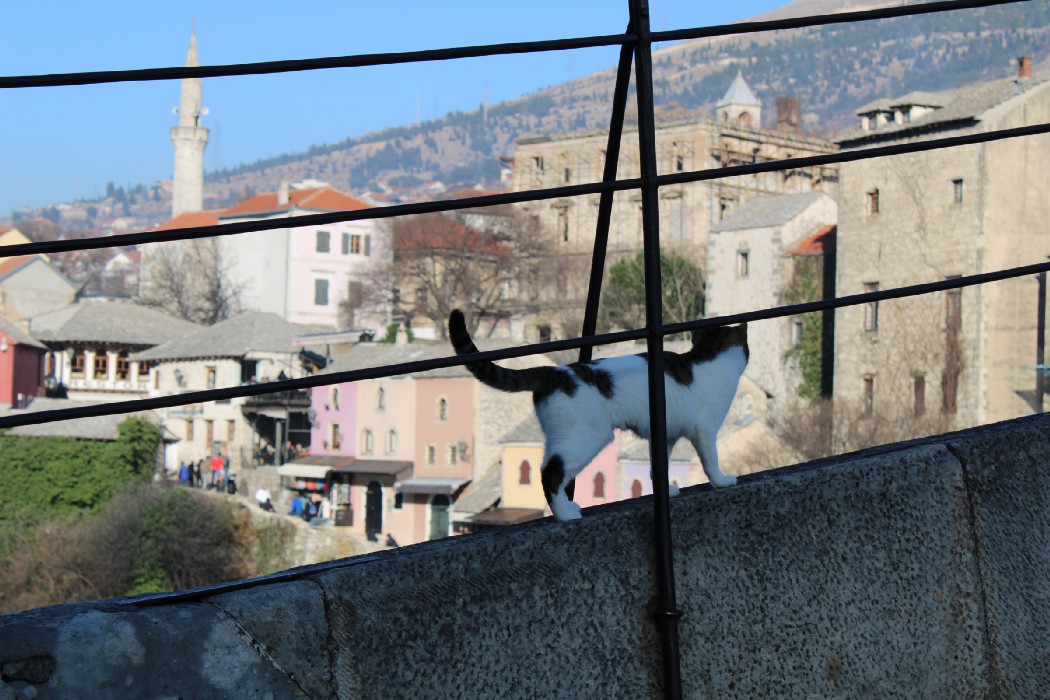
This little acrobat found a convenient way around the crowds on the Stari Most!

Personally, I was more impressed by The Spirit of Herzegovina, a charming, woman-owned wine shop on the east bank of the bridge. Herzegovina, with its Mediterranean climate, is the wine-producing region of the country and although I didn’t have time to tour the different vineyards, the shop offered an excellent variety of local reds and whites, as well as other locally-produced products, to sample from. It was tended to by the affable Mirna, whose name means “quiet and peaceful” although she described herself as “talkative, loud, and clumsy.” On her recommendation, I tried an excellent white named after a local pirate queen.

I won’t lie: it also helped that Mirna was an animal-lover who’d taken in two stray cats, who now live in the shop. One, a tiny gray-and-white girl named Perci (I may have the spelling wrong), played merrily with a decorative almond while I was in the shop.

Perci is an excellent shop cat

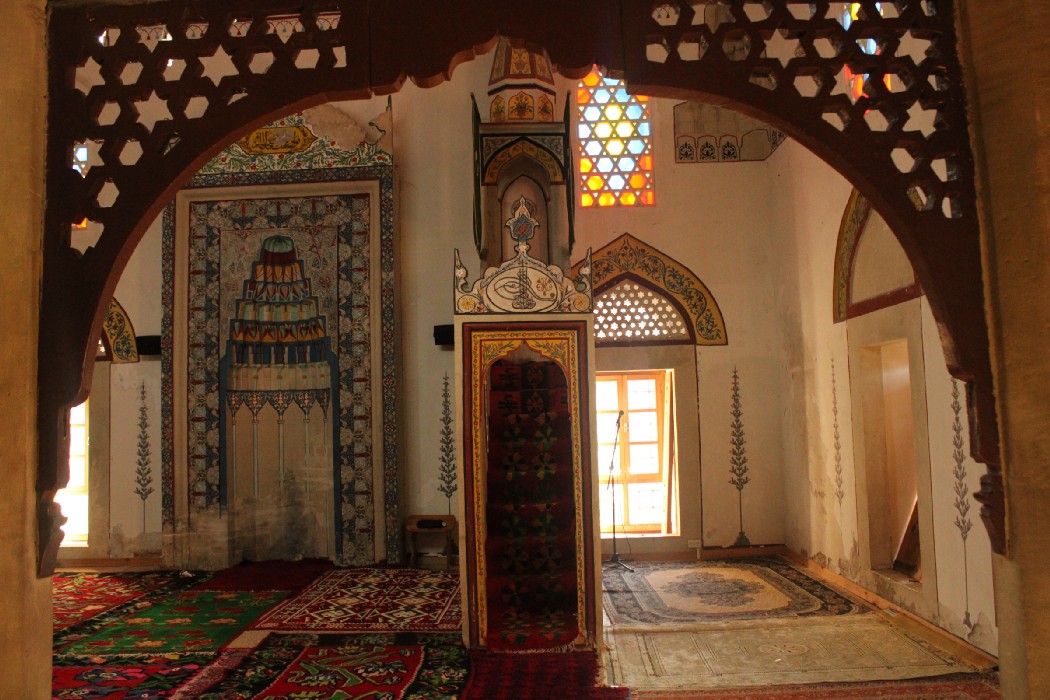
The old town was charming, although very clearly a tourist hotspot, its cobbled streets flanked by knick-knack shops and restaurants advertising mixtures of Bosnian cuisine along with vegetarian and vegan options. On the eastern bank of the bridge, a row of copper artisans sold handmade wares, and the Koski Mehmed Pasha Mosque invited visitors into its colorful sanctuary, for a few Bosnian marks.

The Koski Mehmed Pasha Mosque offers a respite from the old town crowds

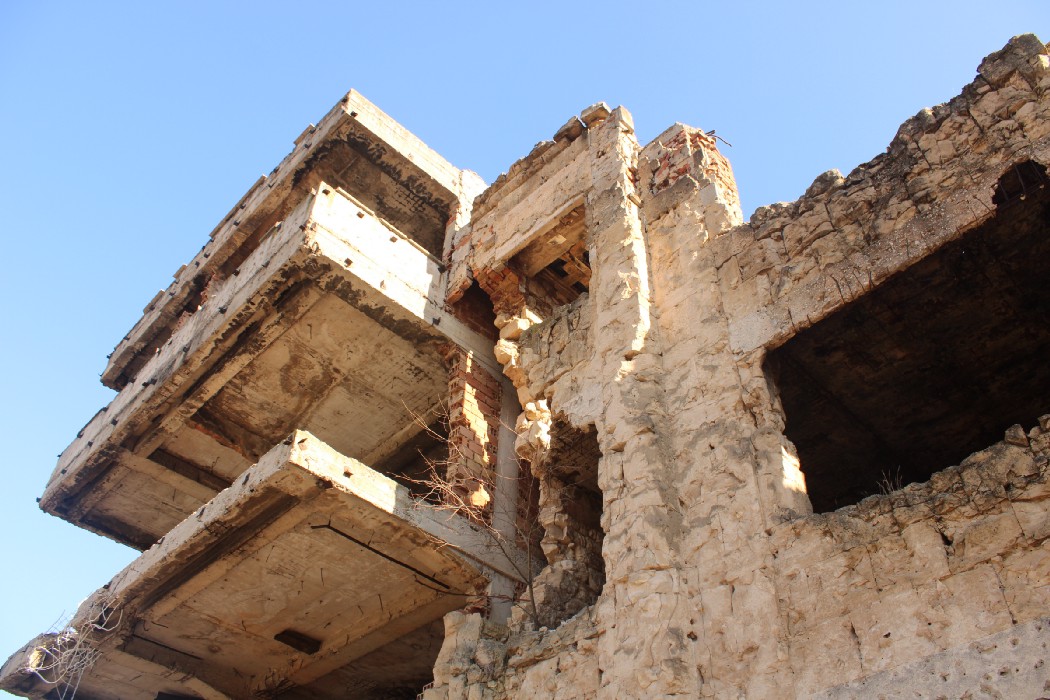
As with too many places throughout Bosnia and Herzegovina, walk for long enough — or not very long at all — and you’ll inevitably comes across remnants of the civil war: buildings half-knocked down and pimpled from artillery shells, their wires exposed like severed arteries to the Mediterranean sun.

Not all of Mostar has been rebuilt although the war ended nearly 30 years ago
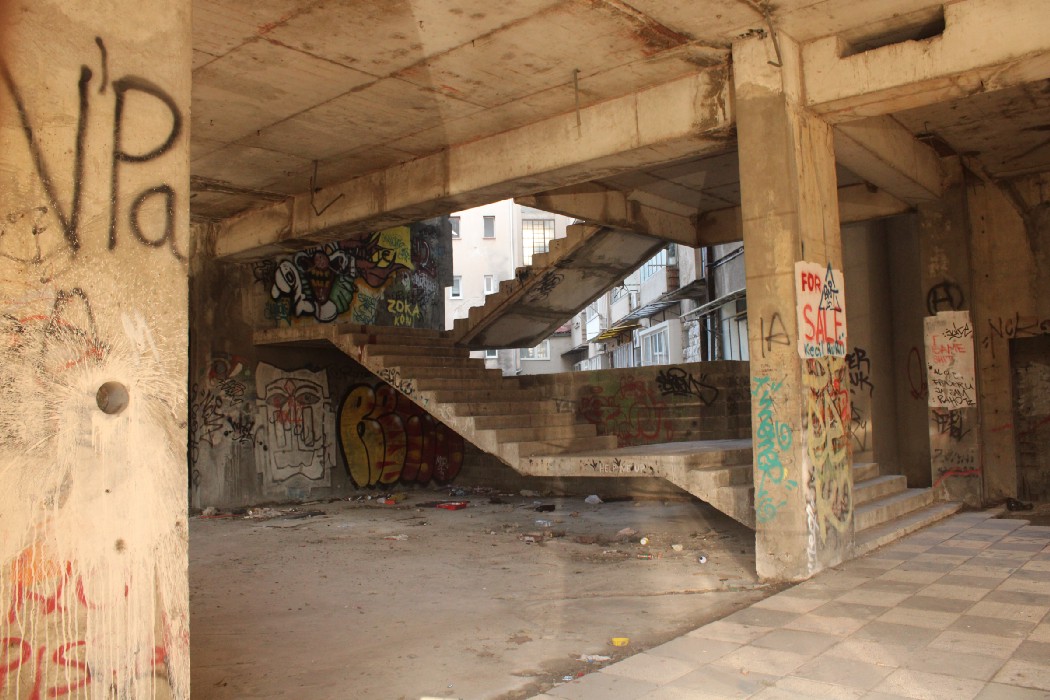
Some ruined buildings, like this one, have become galleries for graffiti artists

How the war came to Mostar represents the conflict’s complexities. In 1992, at the onset of the war, Bosnian-Croats, who were largely Catholic and with the support of Croatia, sided with Bosniaks, who were mostly Muslim, to ward off the siege of the Serb-controlled Yugoslavian army. Unlike in Sarajevo, where the Serbian-backed siege would continue for nearly four years, the Croat-Bosnian coalition succeeded in warding off the invaders a few months into the siege. However, with Serbian forces effectively out of the picture, the Croats and Bosniaks turned on each other. They’d eventually make peace in 1994 with the Washington Agreement, and a year later the Dayton Agreement would bring an end to the civil war.

East of the old town, near the former Orthodox church

Most of the Bosnians (and Herzegovians) I spoke with said that they didn’t have any lingering resentment toward those in different ethnic and religious groups who, less than 30 years ago, were at each other’s throats. Instead, most told me that, as Bosnians, they all need each other to succeed. Yet you can still see the divisions sown by the conflict: although the boundaries are fluid, the western part of Mostar is predominantly Croat, while the eastern part is predominantly Bosniak.

Decorations in a tiny Orthodox chapel in the Bosniak section of Mostar

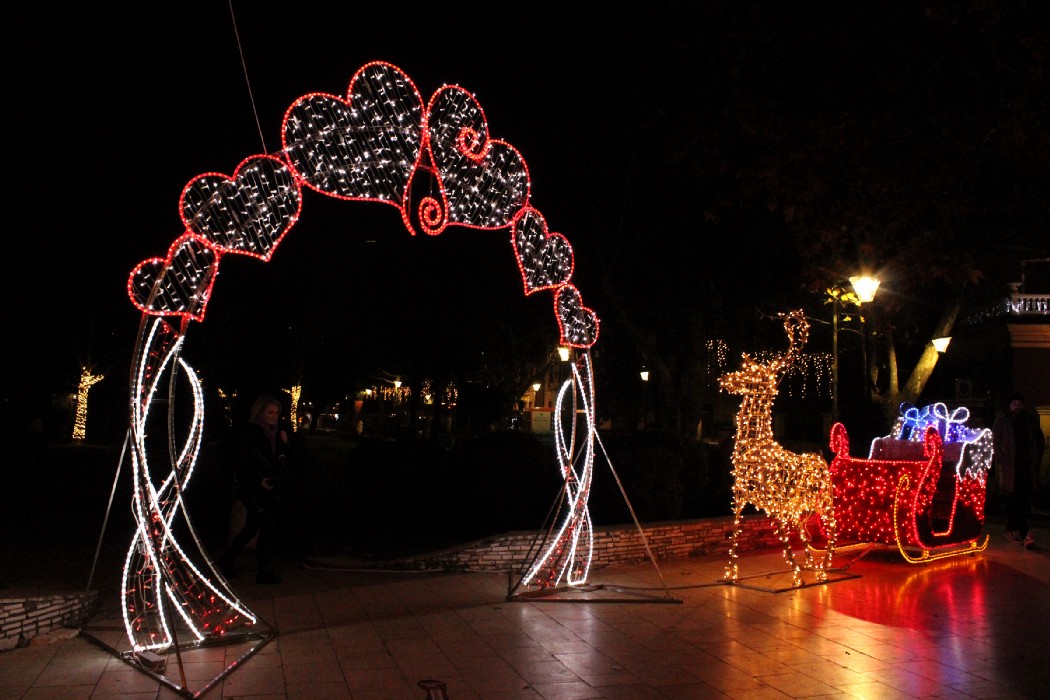
On my first night in the city, I wandered into a Christmas festival on the western bank of the river, just off of the Spanish Square — which, on three of its sides, is flanked by large, crumbling structures damaged in the war and never repaired. It was well after dark, and the old town, as well as much of the eastern bank, had shut down for the night. But we were a few days away from Epiphany, and the festival was going strong. As a single traveler, I felt fairly conspicuous — not to mention lonely — in a setting of families, but bought a box of popcorn for a few marks and got into the festive spirit.

Festivities in the days leading to Epiphany

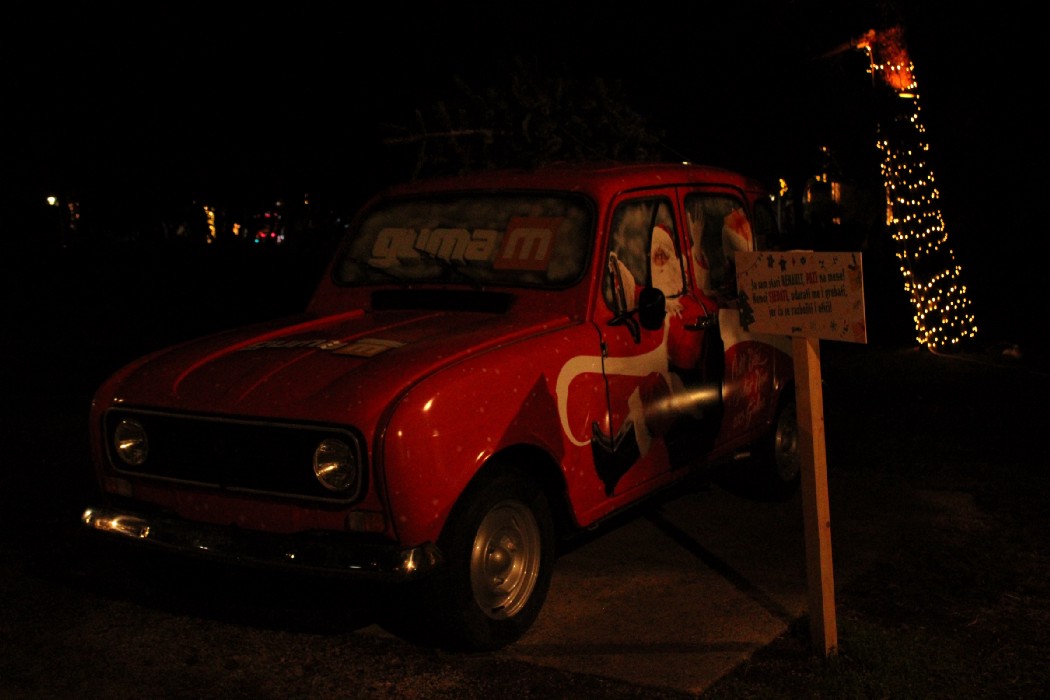
The fairgrounds were bright, cheerful with lights and a skating rink, and, because this was the former Yugoslavia, Santa Claus riding in what appeared to be a Soviet Lada.

Santa doesn’t need a sleigh, or eight tiny reindeer

Behind it all, to the northwest of the fairgrounds, the pot-marked remains of a tower that had sustained heavy damage in the war loomed in the dark, largely unseen.

Sarajevo, Day 2: A visit to an abandoned bobsled and a museum dedicated to childhood war experiences

If I had thought the cable car to the peak of Mount Trebevic wouldn’t be crowded on a chilly, January afternoon I was mistaken. At just after noon, the line stretched from the entrance down a long flight of stone steps and almost to the street, a 30-minute queue of Slavic couples and families with at least one person smoking in each party.

We moved at a slow but steady pace up the steps, past a trail map and a tiny shop selling handmade ornaments commemorating the 1984 Olympics in Sarajevo, then part of Yugoslavia. Those Games were famous for introducing the world to a comely and talented East German skater named Katarina Witt, and British ice dancing pair Jayne Torvill and Christopher Dean, whose gold-medal winning performance to “Bolero” has inspired countless other skaters since. I have no contemporary memories from those Games — the only thing I recall about 1984 was seeing U.S. vice-presidential candidate Geraldine Ferraro speak at the Brooklyn Senior Center — but I do remember the 1994 Lillehammer Olympics fairly well. At the time, Sarajevo had been under siege by Serbian-backed forces who’d positioned themselves in the blue-misted peaks above the city. Witt, Torvill and Dean, along with other ’84 veterans, returned to competition — most well out of medal contention — to commemorate the city that brought them to the world.

After a half-hour wait, the slowest part of which was at the ticket window, I found myself alone in a cable car ascending Trebevic.

All to myself!

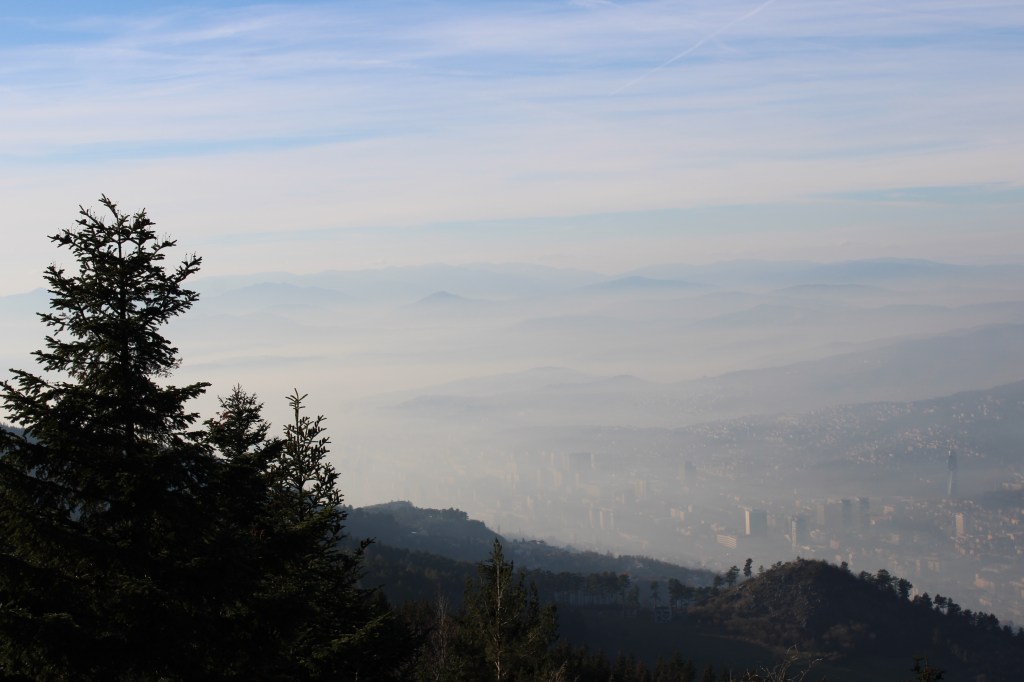
Thanks to the cable car, the mountain has become a popular destination for both Sarajevans and visitors. It offers multiple stunning viewpoints, a plethora of trails ranging from easy to moderate, a scenic snack bar, food carts, and the skeletal remains of fortress left behind by the Austrian-Hungarians, who reigned in Bosnia for around 40 years.

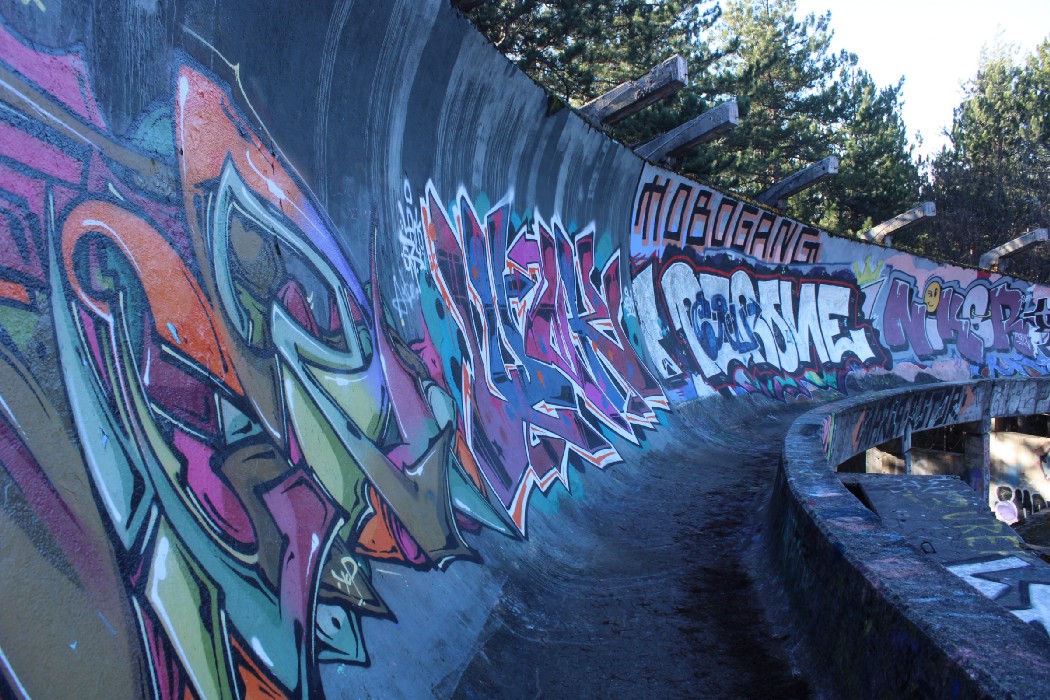
But Trebevic’s star attraction is the remnant of the 1984 bobsled track. The track long ago lost its intended use, but found a second life as a gallery for graffiti artists. It cuts a winding, concrete trail through the forest, its tributaries starting and stopping at strange intervals. Hikers can walk on a trail that parallels the track, or on the track itself.

The 1984 Olympic bobsled track is now an art gallery
The track cuts a winding, concrete trail through the forest

The art is bold, colorful, and often stunning. But each work blurs with the next so that you see the whole rather than the individual efforts — unless you really appreciate art, or have better concentration that I do in my jetlagged-addled state. Some pieces stand out, like this vibrant creation positioned in a dramatic curve:

Words also stand out, especially if they are conveniently in English:

I hadn’t come to Sarajevo, or Bosnia, just to think about the civil war. Any city, and any country, are far more than the sum of a particular conflict. But it’s hard when reminders of it are everywhere, even if only in association to the war in Ukraine.

According to Valida, the proprietor of the guesthouse where I was staying, there was an observatory somewhere on the mountain — a detail that was both a pleasant suggestion for what I might look for up there, but also one which blended seamlessly into talk of the war. Her husband, only a few years before they’d met, had been stationed there as part of the city’s home-grown defenses.

“It had been so scary in those days,” she’d said. “That is why I feel so sad for the people of Kyiv. What they are going through, we went through.”

The Yugoslav wars, not just in Bosnia, but throughout much of the Balkan peninsula, were the last wars fought on European soil before the invasion of Ukraine by Russia last February, at the conclusion of another modern Olympic Games. The siege of Sarajevo, which lasted from the spring of 1992 to February of 1996, was one of the longest in the history of modern warfare. After the international community recognized Bosnia and Herzegovina as an independent country, Serbian-backed forces besieged the city. Nearly 14K people were killed during the conflict, including thousands of civilians.

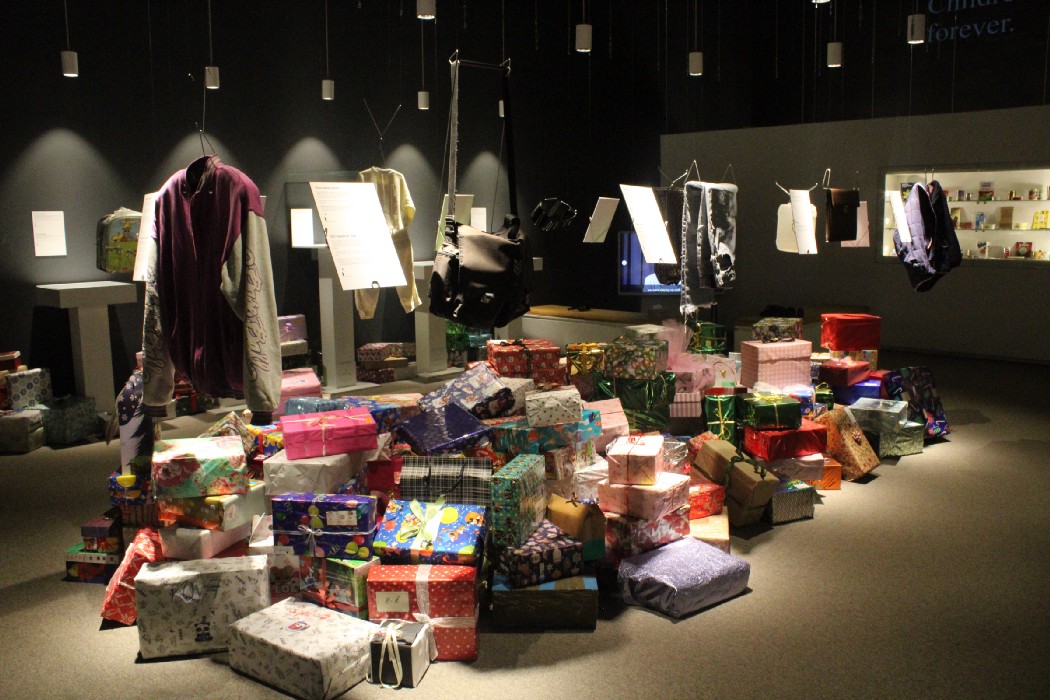
The War Childhood Museum, on a quiet street just off the old town, provides a moving and heartfelt perspective on the war, through the lens of the children who lived through it. The museum was founded by Jasminko Halilovic, who’d experienced the siege of Sarajevo as a child, and who was inspired to share the stories of others like them. The collection includes hundreds of objects, donated by survivors, which represent their experiences from the time; 50 were on display at the time of my visit. Each is painfully ordinary, a symbol of everyday life horribly disrupted: a pair of Startas sneakers, a set of Legos, a favorite jacket from a relative killed in the siege.

Objects on display at the War Childhood Museum in Sarajevo

Quite a few of the objects do carry a great deal of the horror of war. Some, like the aforementioned jacket, are reminders of loved ones who were killed, including other children. Others, however, like homemade birthday cards, offer a glimmer of light into how families and communities.

The collection also includes video testimony from survivors, who provide further insight into how they, and their families, attempted to keep life going as ordinarily as possible during this time. They talk about how their mothers made New Year’s cakes out of crackers and gelatin, how neighbors gathered in the relative safety of houses and gardens, of how their parents insisted that they keep up their schooling however they could — pursuits that gave them creative and intellectual outlets that gave them an escape from reality, and allowed them to survive.

While most of the items on display were from the Bosnian civil war, and the Sarajevo siege, there were others, too, on display from the conflict from Ukraine, starting with Russia’s annexation of the Crimea in 2014 — a direct line from then to now, and a sad reminder that the cruelties of history march on.

I will have more on the war, as well as more cheerful topics, in upcoming posts.

Sarajevo, Day 1: Bomb Threats, Franz Ferdinand, and a (Very!) Brief History of the Balkan Conflicts

My visit to Sarajevo got off to a somewhat ominous start. A bomb threat occurred at the international airport, just as I was finishing up at the ATM. A suspicious package had been found in the arrivals’ hall. Soon, police had blocked off a trapezoidal perimeter around the offending object and had ushered everyone outside into the cool, evening air.

Valida, the amicable woman who runs the Halvat Guesthouse, was concerned when I told her the news. Her previous guest had just departed for the airport. “Things like that, they do not happen here.”

Things like that don’t happen often in Sarajevo, which has been relatively at peace since the Dayton Accords brought an end to the three-year civil war that ravaged Bosnia and Herzegovina from 1992 to 1995. Tensions between the country’s ethnic groups, however, began to flare up again in 2021, after political leaders of the Serbian-controlled parts of the country threatened to separate from national government entities — a threat that hasn’t yet come to pass, but which continues to simmer.

I don’t know whether the bomb threat at the airport was the result of this tension, a statement about today’s geopolitical climate as a whole, or merely a hoax. But, since it wasn’t covered by the local news, I assume that the threat, if any existed, had been neutralized.

Bascarsija (Old Town), Sarajevo

Jetlagged and tired, I took any evening walk through Sarajevo’s old town, or Bascarsija, down to the Miljacka River. A few kilometers down I came to a place the history buff in me has wanted to see for decades: the Latin Bridge where, in 1914, Archduke Franz Ferdinand, heir to the Austrian-Hungarian throne, was assassinated, an event widely credited as starting the First World War.

Whether the assassination really started the war is a matter of historic debate. At the time, Europe was brittle with nationalistic sentiment that led just about every country to believe that a nice war would be good for the patriotic spirit. So, after Ferdinand and his wife, Sophie, were both shot by Gavrilo Princip, a Bosnian Serb and Slavic nationalist, as their motorcade traveled across the Latin Bridge, Austria-Hungary and ally Germany — itself cobbled together from the remains of the Holy Roman Empire and a new player on the world’s superpower stage — had the perfect excuse to declare war on Serbia. From there, it was just a matter of time before the remaining European powers, linked together by a complex web of treaties, all fell into the fray.

The Latin Bridge, where Franz Ferdinand and wife, Sophie, were assassinated in 1914

Ironically, Ferdinand and Sophie’s deaths garnered little attention in Vienna, where the initial collective response was “Meh.”

It would also be an apt way to describe Sarajevo’s reaction, if the Latin Bridge is any indication. Only a glass plaque commemorates the site’s historic significance. Otherwise, the bridge itself is very much like many of the others that span the trickling Miljacka: an arch of stone dazzling with Christmas lights.

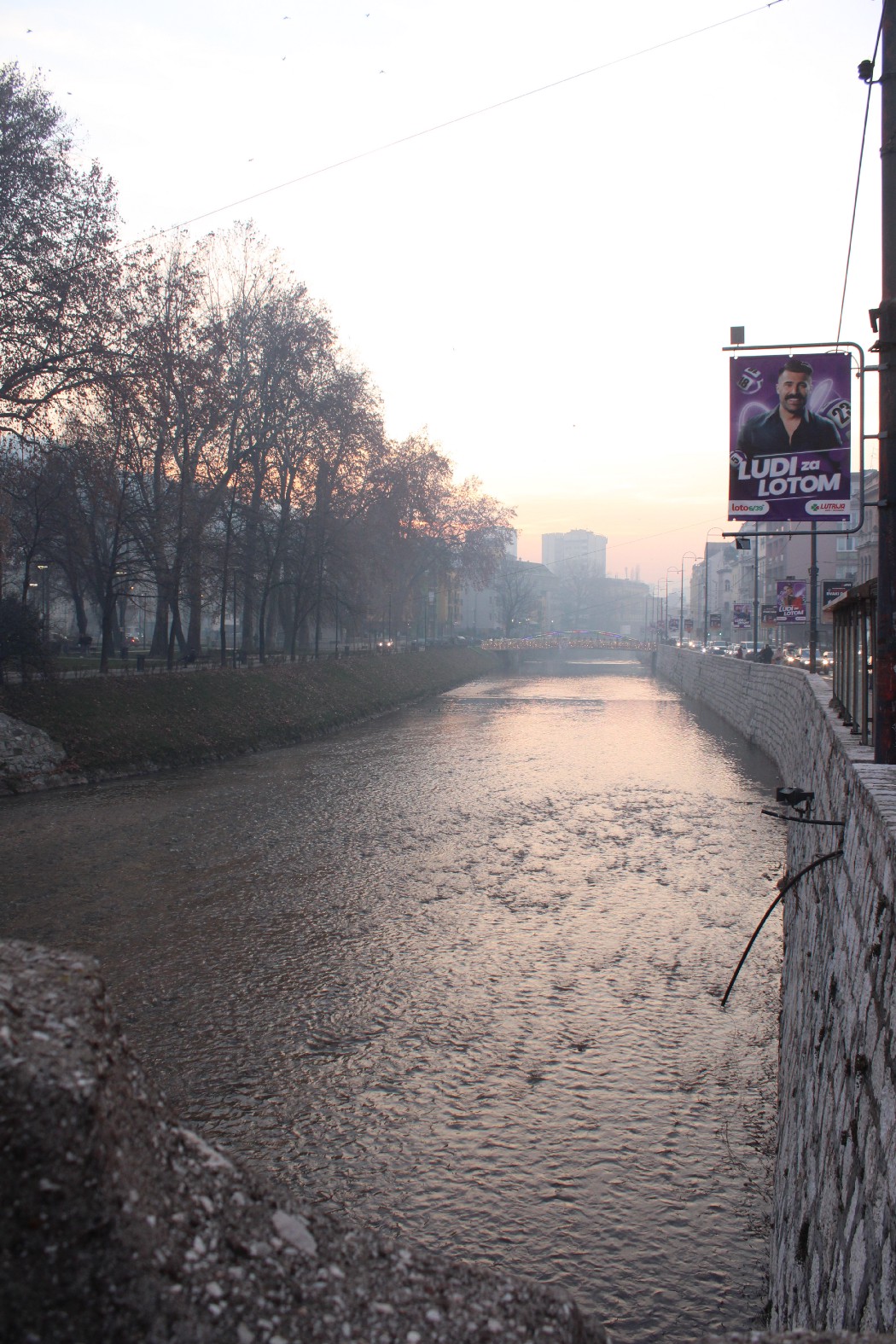
Smoggy view of the Miljacka River. Most, if not all, of the bridges are lit.

I shouldn’t have been surprised. The Latin Bridge is just a bridge, after all. And while the Great War left a huge scar on the European psyche, within the larger context of modern Bosnia, the death of two nobles over 100 years ago is hardly a blip on the radar.

At the time of the assassination, the Balkan peninsula had been something of a powder keg. The countries of Bulgaria, Greece, Montenegro and Serbia had gained their independence from Ottoman rule, but Bosnia had been annexed into the Austrian-Hungarian empire. Nationalist fervor in the independent countries sparked the Balkan Wars of the early 20th century, and calls for a unified Slavic nation from Bosnian Serbs. Gavrilo Princip had been part of this movement, and Ferdinand’s assassination had been a protest against continuing Austrian-Hungarian control of the country. By the end of the war, Princip got his wish: the Austrian-Hungary empire ceased to be and a united Yugoslavia (modern-day Bosnia, Croatia, Kosovo, Montenegro, North Macedonia, Serbia, and Slovenia) was born.

The break-up of Yugoslavia in the 1990s, a decade after the death of strongman leader Josep Broz Tito, led to renewed conflict among Bosnia’s ethnic groups. The details are far too complicated for me to go into, or even follow, but the basics are this: Bosnian Serbs wanted to remain part of a united Slavic nation while Bosnian Croatians and Bosnian Muslims did not. Bosnian Serbs, with the help of Serbia, responded by laying siege to the country — a brutal campaign of destruction, rape, and genocide that claimed around 100,000 lives and impacted millions more.

The civil war and genocide marked how much of the world saw Bosnia in the 1990s, and while the Dayton Accords ended the conflict in name, tensions continue — as they would from a civil war that ended less than 30 years ago. It’s still very much in living memory for many Bosnians.

But these tensions seemed far away as I continued my walk from the Latin Bridge through the old town, teaming with Christmas lights and decorations, ice rinks and families out enjoying a pleasant New Year’s evening. Mosques were open for late-night prayers, their domes and minarets illuminated by floodlights. On the streets, men sold roasted pomegranates from carts. On the surface, at least, it was the picture of ideal balkanization: the city as melting pot, where people of differing religions and ethnicities could coexist.

Decked out for the holidays
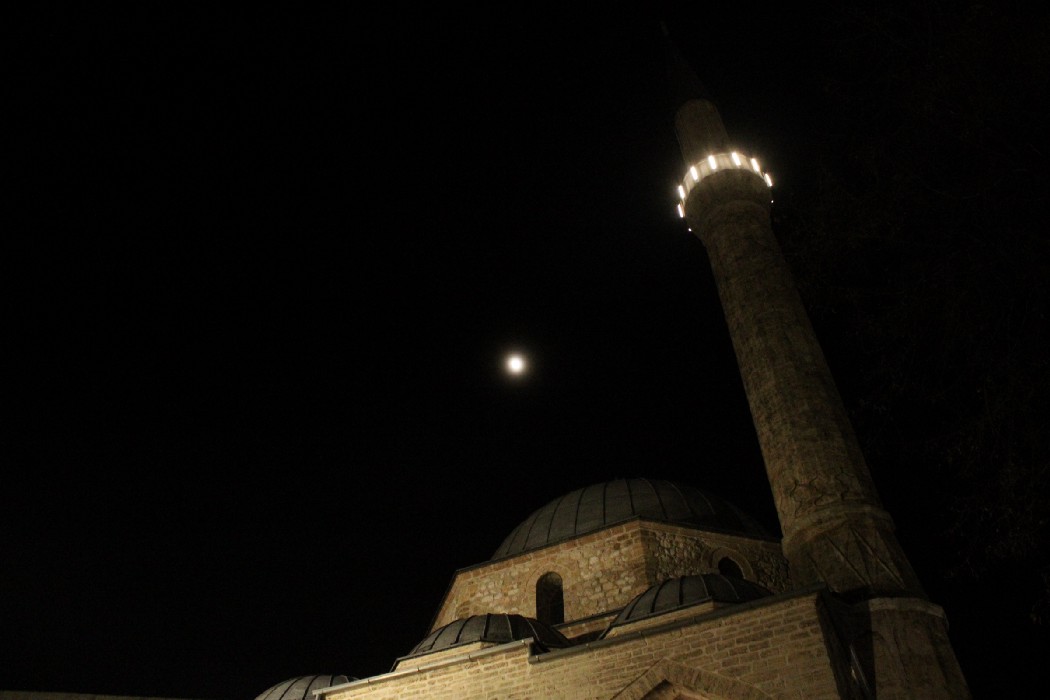
Bascarsija Mosque, near Pigeon Square

Upon my return to the Latin Bridge, as I made my way back to the guesthouse, I saw an even more serene site: a gray tabby had plopped itself onto the stone wall along the river, just meters away from where Princip had fired his fatal shots. The creature was friendly and plump, likely someone’s housecat making its rounds. It purred quietly, happy to soak in the beauty of the night.

This little one has never heard of Franz Ferdinand