I won’t lie. My first day in Istanbul I sat in the outdoor cafe at the Topkapi Palace sipping hot chocolate and taking endless, alternating photographs of the European and Asian sides of the Bosporus: Europe, Asia. Europe, Asia.

To be fair to myself, I was recovering from jetlag and I had never before seen, let alone been to, Asia. I was completely taken in by the city’s East-meets-West sparkle — or at least the idea of it. I traveled to Istanbul in February of 2015, almost exactly one year before the failed military coup that would result in President Recep Tayyip Erdogan solidifying his strongman’s hold on power. Not quite a golden age for the city, or for Turkey — the country had already been in the grips of authoritarian power — but before things got really bad.
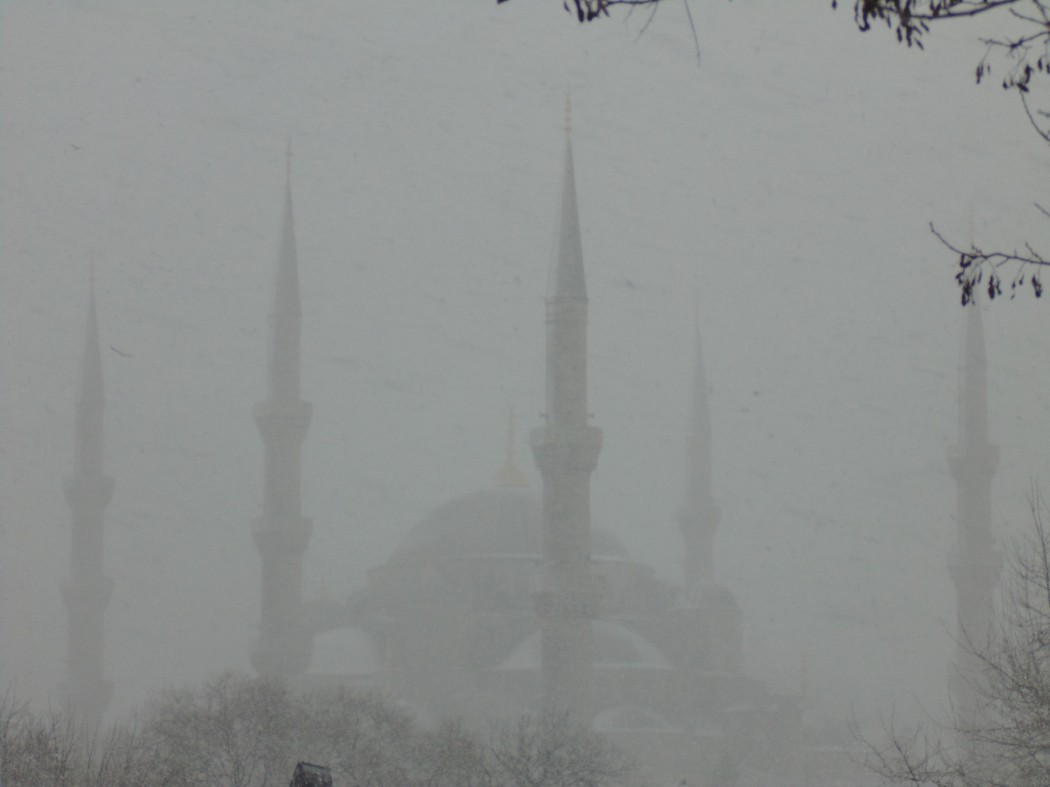
I’d wanted to visit Istanbul since coming across a paperback copy of Orhan Pamuk’s exquisite memoir, Istanbul — a love letter to his complex city — at a library in the early 2000s. I’d purchased my ticket on a whim thanks to a sale on Turkish Airlines. I booked a room in a small hotel in the shadow of the Blue Mosque, where the proprietor kept a blanket and water bowls out for the stray dogs who patrolled the street. I’d read Pamuk’s book at intervals between touring the city’s mosques, the spice market, and Grand Bazaar.

As a tourist with limited experience traveling outside of North America and Europe, it was nearly impossible for me to not be entranced by the very things Western tourists (or at least those of us coming from a Judeo-Christian background) find enchanting. So I ticked off the tourist to-do list. The Blue Mosque, Hagia Sophia, and Topkapi Palace I did in a whirlwind morning/afternoon, and I capped off the evening with a Turkish coffee in the Grand Bazaar. Another day, I took the tram to Taksim Square and strolled along the famed Istiklal Caddesi in a blizzard. On my last day, I took the ferry across the Bosporus to Istanbul’s Asian shore before traveling onward to Kusadasi, on the western coast of the Aegean.

As a traveler, I’m always caught in an impossible bind: my purpose for traveling is to gain greater insight into other parts of the world — as it is for many travelers — and yet, as a traveler, any insight I gain is inevitably limited by my perspective as an outsider. For starters, it’s far too easy to get sucked into the glitz and spectacle of sites which the former history major in me craves. But even if I were to spend a week, a month, or a year in any new place, how much would my outsider’s perspective really change?
It’s a contradiction I feel whenever I travel, wherever I travel, but I felt it more distinctly when in Istanbul. Until going to Turkey in 2015, most of my travels were confined to Western Europe — rooted more predominantly in the “Western” and Christian traditions, which aren’t all that dissimilar to the traditions with which I grew up in the United States. The closest I’d gotten to anything different was in Spain, where the Islamic culture that once flourished has since been subdued by Roman Catholicism.
But in Istanbul, I was all too aware that I was seeing the city, as Pamuk might write, as a Western tourist: as the romantic (and exoticized) East, the former Ottoman counterpart to the European West, Christianity’s lost Constantinople infused with a new life.
Yet there was more to it than that. I genuinely liked Istanbul, beyond its obvious and spectacular highlights. In fact, what stands out to me about the city were its smaller, mundane moments: a waiter on the Bosporus ferry gracefully taking tea to passengers, smiling when the chop caught him momentarily off-balance; a fishmonger in a market who kept heaps of scrap aside for a hungry tuxedo cat; young adults who broke into impromptu snowball fights as a blizzard turned into fat, fluffy flakes.

I’ve not been back to Istanbul since. There were just too many reasons not to go: marriage, cats, Covid. Life intervened. Plenty of other cities, other countries to travel to. Plus, since the coup, Erdogan’s hold on power has only increased. The State Department lists Turkey under a Level 2 advisory, warning against the possibility of terrorist attacks (which, let’s be honest, can and do happen anywhere) and arbitrary detentions of foreign nationals. I’m not a fearful traveler but, as a writer, the latter does give me pause.

But that trip to Istanbul did convince me that I need to travel deeper. That I can’t just collect countries as stamps in a passport and be done with it. I need to go beyond my natural inclination to see the world as a tourist — not that I can’t be a tourist, but that I need to step more outside of my comfort zone.
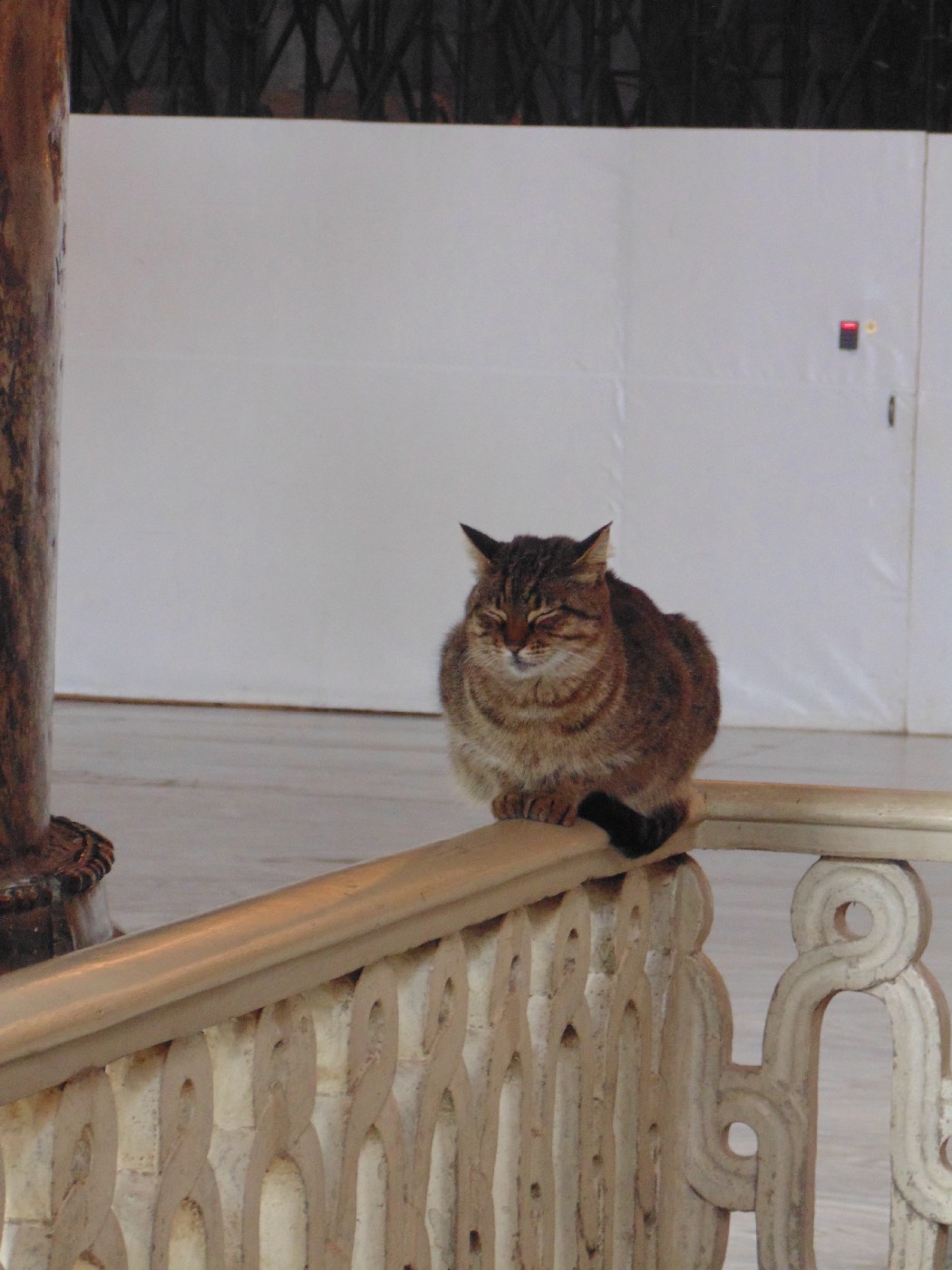
Which is why my resolution for 2023 is to revisit Istanbul, without expectations, and without an agenda. Okay, so I have some agenda. I would like to revisit the Hagia Sophia, which, since my last visit, has been transformed back into a mosque by the Erdogan government — although what I’m really interested in is whether or not the family of cats who called the former museum home, and who were cared for my its workers, are still allowed on the premises. I would also like to learn more about the Sufi Dervishes, specifically the women Dervishes who are pushing the boundaries of gender limitations. And I would like to visit Bigudi, one of the city’s few queer venues, which provides a safe haven for Istanbul’s queer folks and allies in an increasingly homophobic society.
But mostly, I just want to see where the days take me.
If you like this story, you can follow me (@robinjkish) on Medium and on Instagram!

 Robin J Kish, Writer