A sign at the toll entrance to the motorway wished our bus “Good Luck” as we headed south from Sarajevo and over the mountains to Mostar, in Herzegovina. A somewhat ominous way of wishing us a pleasant journey, but fortunately no luck was needed. The road was perfectly smooth and safe, climbing hairpin turns into the craggy mountains and running parallel to the ice-green Neretva River.

The region of Herzegovina — and the part of the country’s name that often gets dropped off for brevity’s sake — lies to the south of Bosnia, butting up against Montenegro to the east and Croatia and the Adriatic to the west. The largest city is Mostar, a popular daytrip for tourists from Sarajevo or Dubrovnik in the summer months. Its crowning jewel for visitors is the Stari Most, a sixteenth-century Ottoman bridge that bisects the city’s picturesque old town and connects the Croat-populated neighborhoods on the western bank of the Neretva to the Bosniak-populated neighborhoods in the east.

The original bridge, considered one of the best-preserved examples of an Ottoman model, had been destroyed by Croat forces during the middle years of the civil war. It was later reconstructed thanks to foreign donations and reopened in 2004.
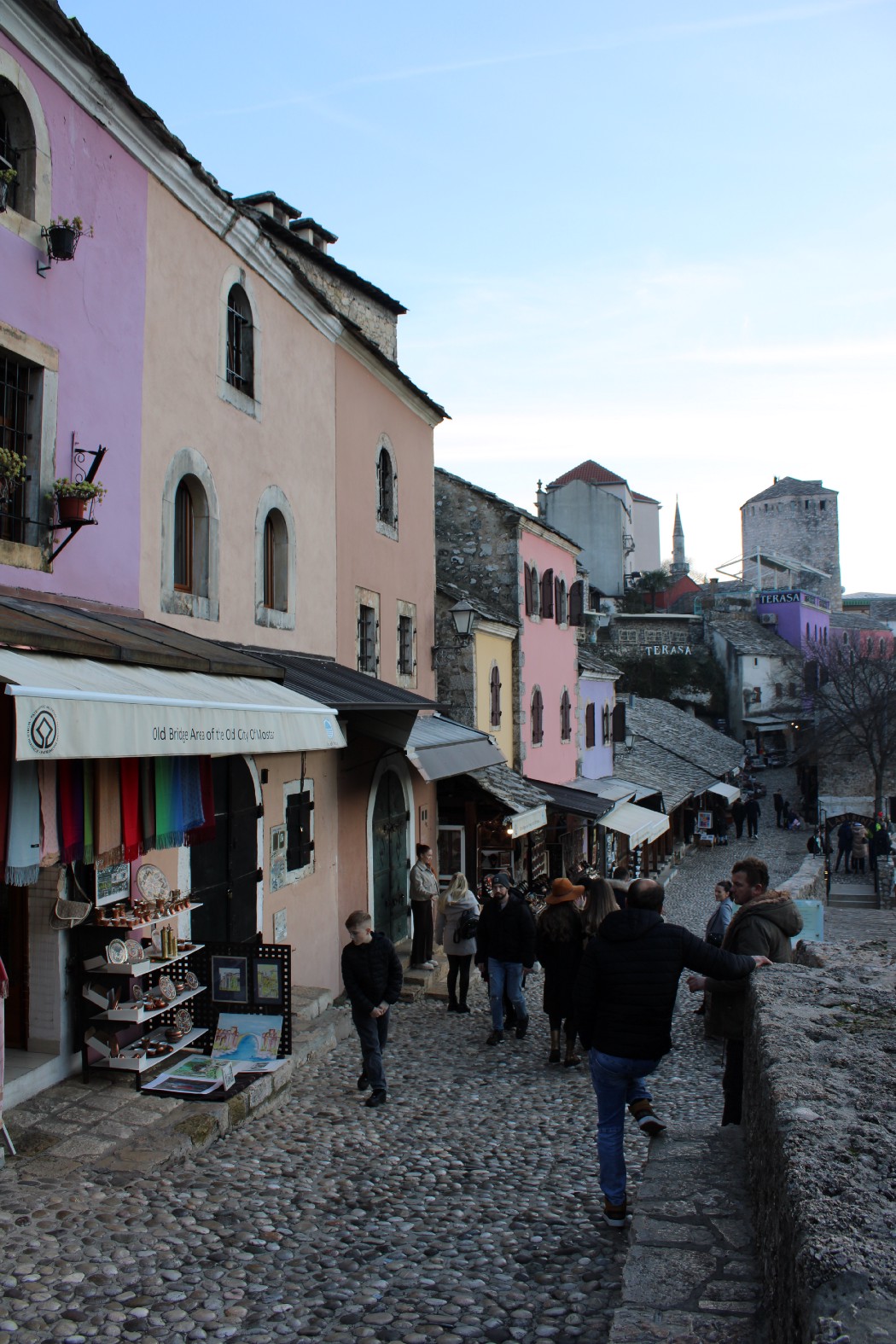
In the jam-packed summer months, I was told by just about every local I spoke to, crossing the bridge could be a twenty-minute ordeal. Since I was visiting in January, the crowds were thankfully smaller — although the city’s entire tourist population still seemed to concentrate itself on the bridge for the obligatory group photo or selfie.
Personally, I was more impressed by The Spirit of Herzegovina, a charming, woman-owned wine shop on the east bank of the bridge. Herzegovina, with its Mediterranean climate, is the wine-producing region of the country and although I didn’t have time to tour the different vineyards, the shop offered an excellent variety of local reds and whites, as well as other locally-produced products, to sample from. It was tended to by the affable Mirna, whose name means “quiet and peaceful” although she described herself as “talkative, loud, and clumsy.” On her recommendation, I tried an excellent white named after a local pirate queen.
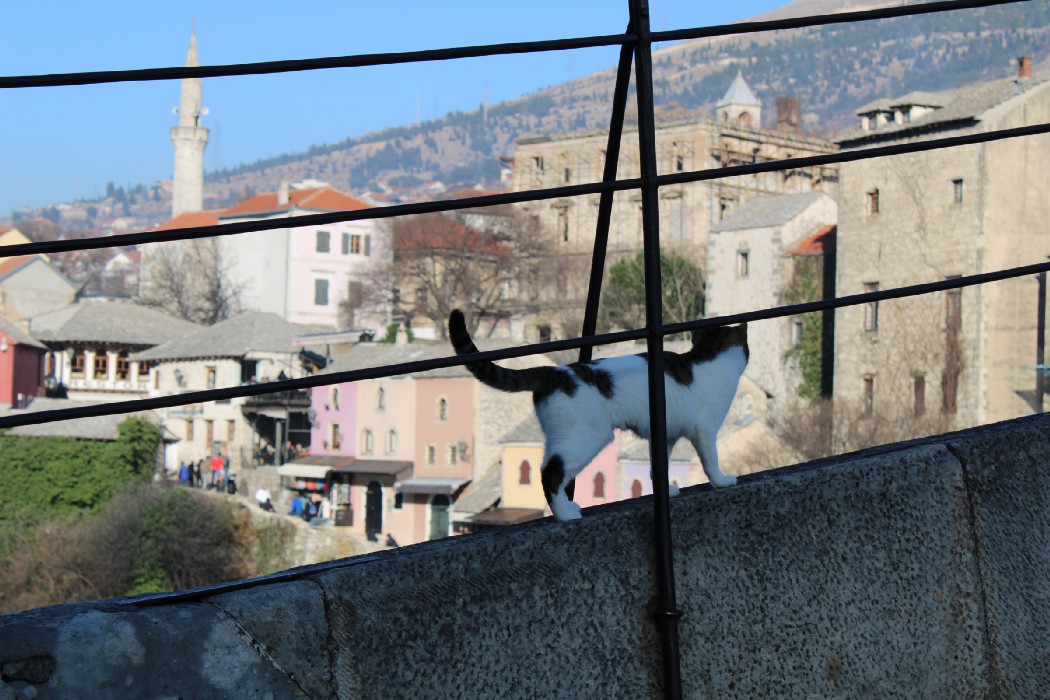
I won’t lie: it also helped that Mirna was an animal-lover who’d taken in two stray cats, who now live in the shop. One, a tiny gray-and-white girl named Perci (I may have the spelling wrong), played merrily with a decorative almond while I was in the shop.

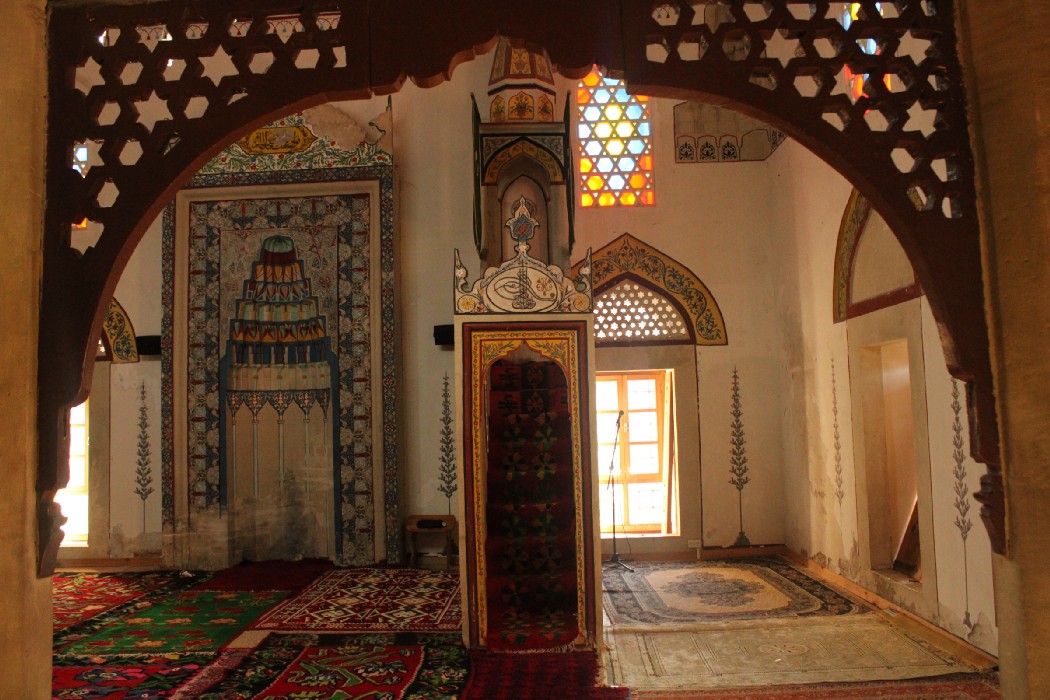
The old town was charming, although very clearly a tourist hotspot, its cobbled streets flanked by knick-knack shops and restaurants advertising mixtures of Bosnian cuisine along with vegetarian and vegan options. On the eastern bank of the bridge, a row of copper artisans sold handmade wares, and the Koski Mehmed Pasha Mosque invited visitors into its colorful sanctuary, for a few Bosnian marks.
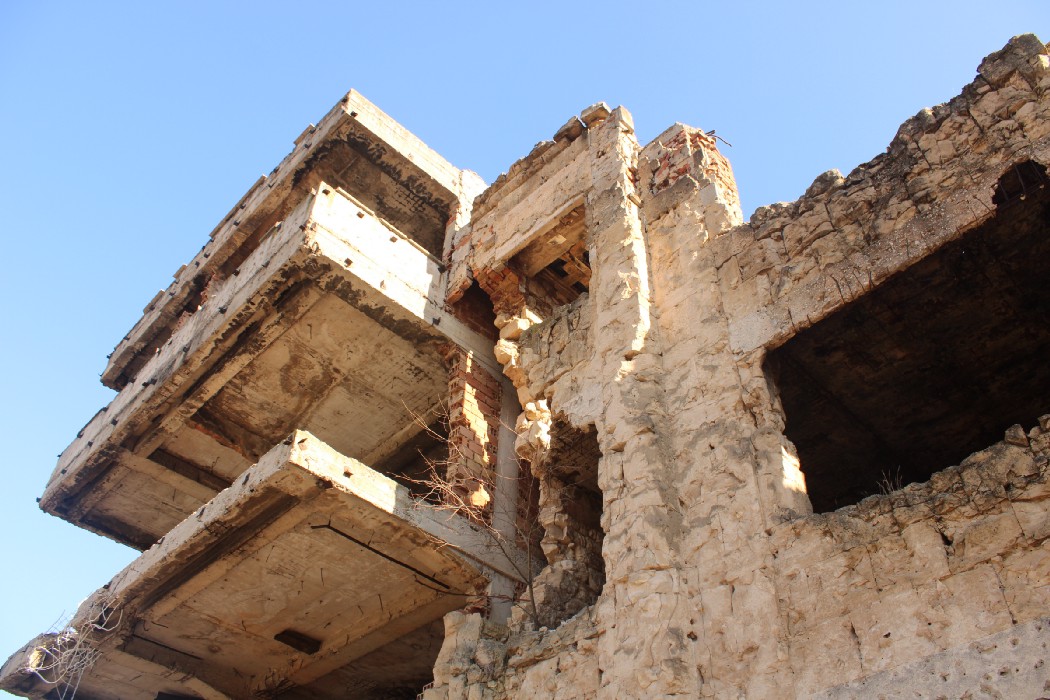
As with too many places throughout Bosnia and Herzegovina, walk for long enough — or not very long at all — and you’ll inevitably comes across remnants of the civil war: buildings half-knocked down and pimpled from artillery shells, their wires exposed like severed arteries to the Mediterranean sun.
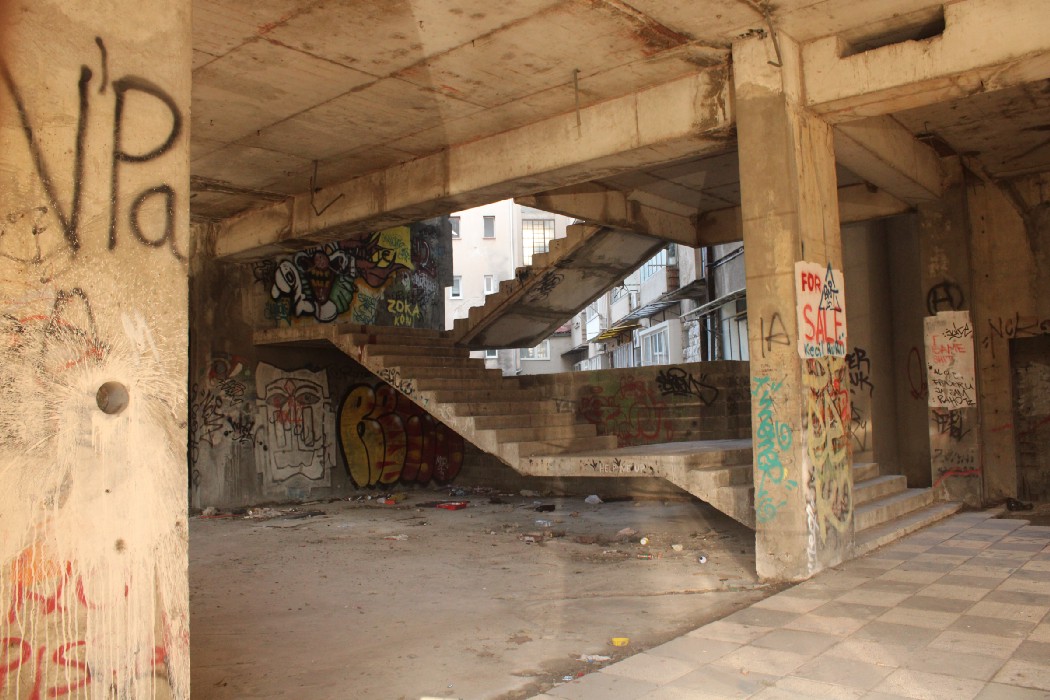
How the war came to Mostar represents the conflict’s complexities. In 1992, at the onset of the war, Bosnian-Croats, who were largely Catholic and with the support of Croatia, sided with Bosniaks, who were mostly Muslim, to ward off the siege of the Serb-controlled Yugoslavian army. Unlike in Sarajevo, where the Serbian-backed siege would continue for nearly four years, the Croat-Bosnian coalition succeeded in warding off the invaders a few months into the siege. However, with Serbian forces effectively out of the picture, the Croats and Bosniaks turned on each other. They’d eventually make peace in 1994 with the Washington Agreement, and a year later the Dayton Agreement would bring an end to the civil war.

Most of the Bosnians (and Herzegovians) I spoke with said that they didn’t have any lingering resentment toward those in different ethnic and religious groups who, less than 30 years ago, were at each other’s throats. Instead, most told me that, as Bosnians, they all need each other to succeed. Yet you can still see the divisions sown by the conflict: although the boundaries are fluid, the western part of Mostar is predominantly Croat, while the eastern part is predominantly Bosniak.

On my first night in the city, I wandered into a Christmas festival on the western bank of the river, just off of the Spanish Square — which, on three of its sides, is flanked by large, crumbling structures damaged in the war and never repaired. It was well after dark, and the old town, as well as much of the eastern bank, had shut down for the night. But we were a few days away from Epiphany, and the festival was going strong. As a single traveler, I felt fairly conspicuous — not to mention lonely — in a setting of families, but bought a box of popcorn for a few marks and got into the festive spirit.
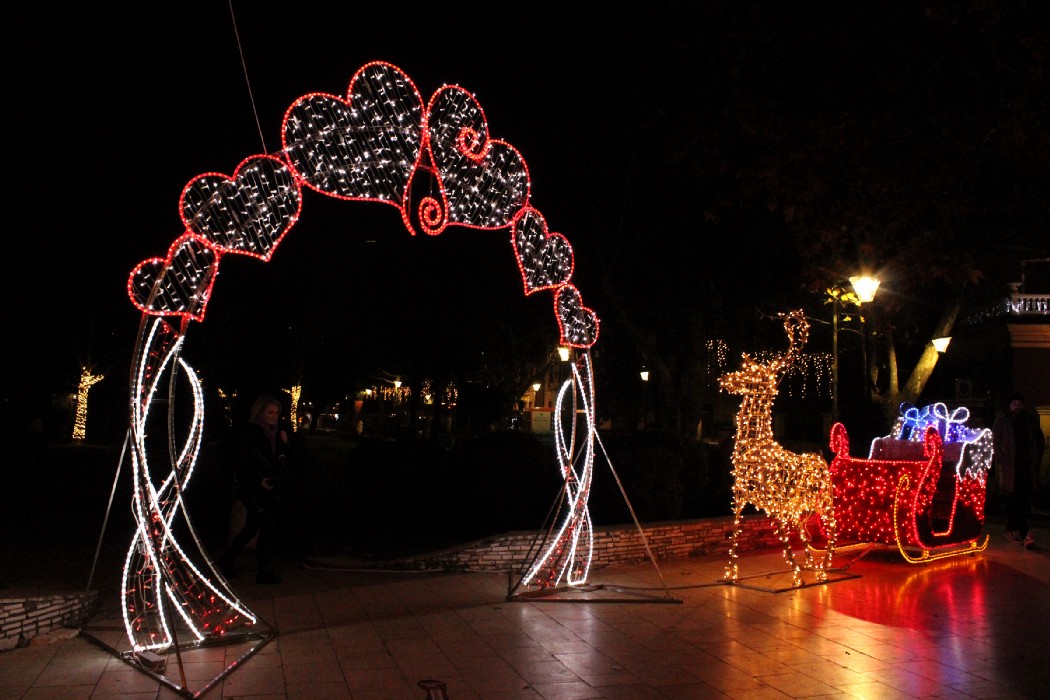
The fairgrounds were bright, cheerful with lights and a skating rink, and, because this was the former Yugoslavia, Santa Claus riding in what appeared to be a Soviet Lada.
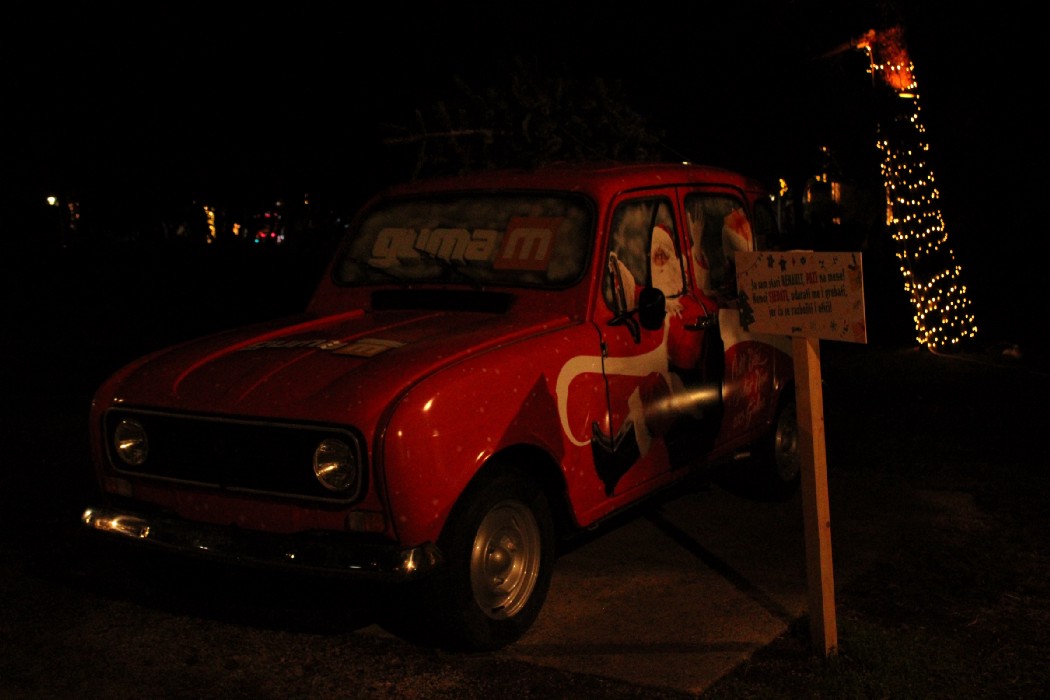
Behind it all, to the northwest of the fairgrounds, the pot-marked remains of a tower that had sustained heavy damage in the war loomed in the dark, largely unseen.

 Robin J Kish, Writer