If I had thought the cable car to the peak of Mount Trebevic wouldn’t be crowded on a chilly, January afternoon I was mistaken. At just after noon, the line stretched from the entrance down a long flight of stone steps and almost to the street, a 30-minute queue of Slavic couples and families with at least one person smoking in each party.
We moved at a slow but steady pace up the steps, past a trail map and a tiny shop selling handmade ornaments commemorating the 1984 Olympics in Sarajevo, then part of Yugoslavia. Those Games were famous for introducing the world to a comely and talented East German skater named Katarina Witt, and British ice dancing pair Jayne Torvill and Christopher Dean, whose gold-medal winning performance to “Bolero” has inspired countless other skaters since. I have no contemporary memories from those Games — the only thing I recall about 1984 was seeing U.S. vice-presidential candidate Geraldine Ferraro speak at the Brooklyn Senior Center — but I do remember the 1994 Lillehammer Olympics fairly well. At the time, Sarajevo had been under siege by Serbian-backed forces who’d positioned themselves in the blue-misted peaks above the city. Witt, Torvill and Dean, along with other ’84 veterans, returned to competition — most well out of medal contention — to commemorate the city that brought them to the world.
After a half-hour wait, the slowest part of which was at the ticket window, I found myself alone in a cable car ascending Trebevic.
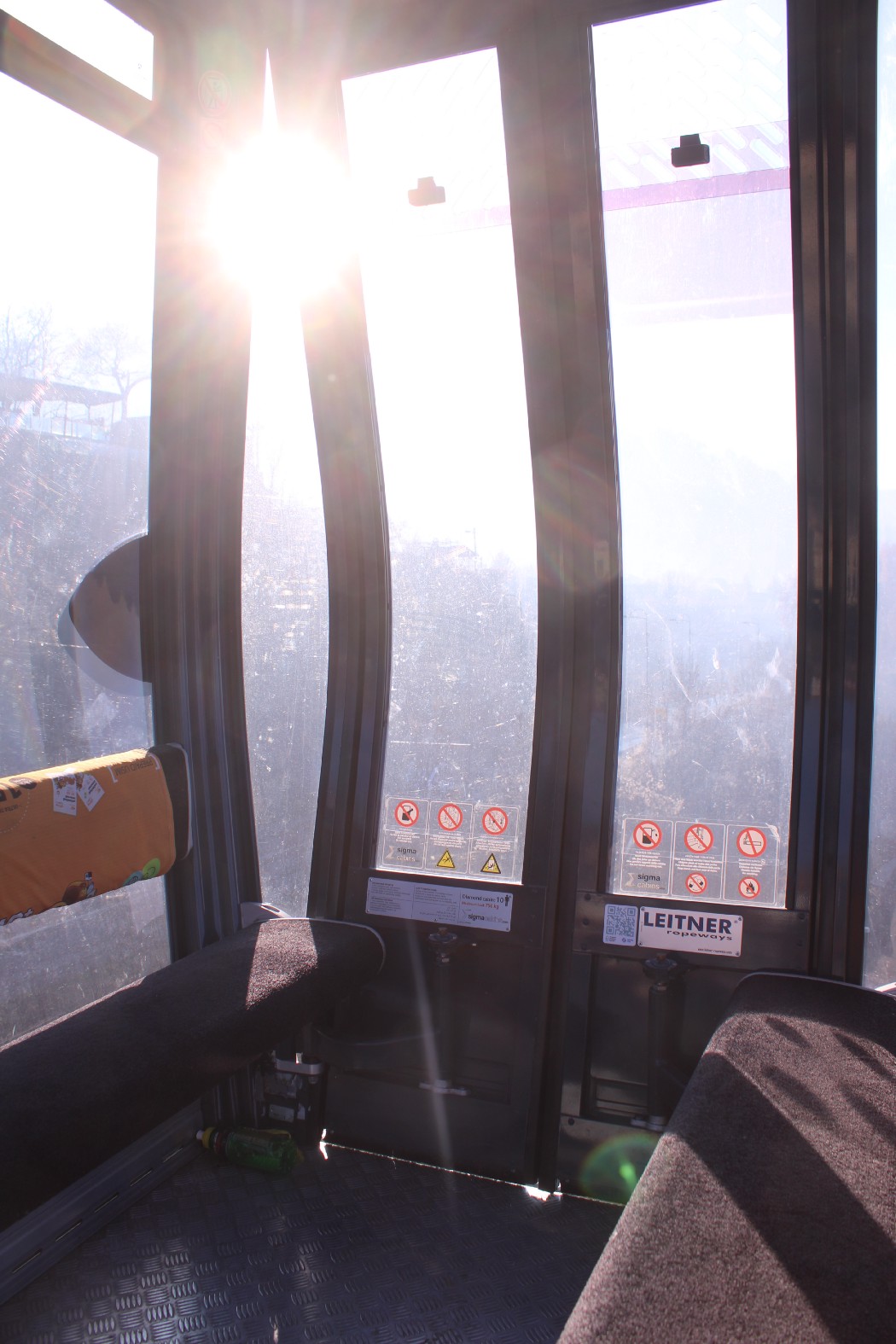
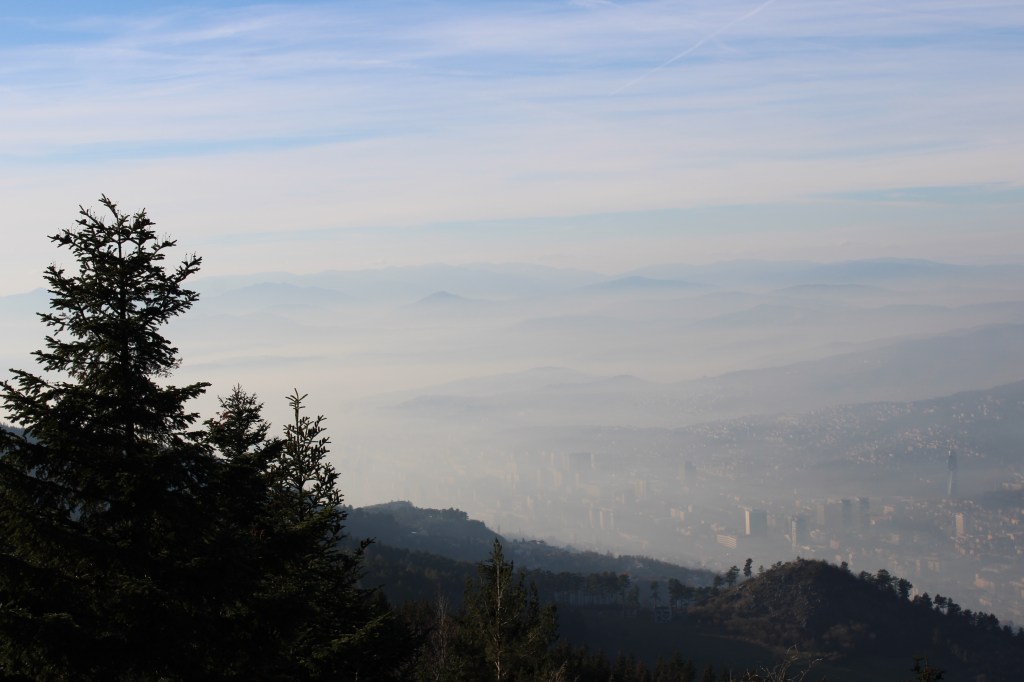
Thanks to the cable car, the mountain has become a popular destination for both Sarajevans and visitors. It offers multiple stunning viewpoints, a plethora of trails ranging from easy to moderate, a scenic snack bar, food carts, and the skeletal remains of fortress left behind by the Austrian-Hungarians, who reigned in Bosnia for around 40 years.
But Trebevic’s star attraction is the remnant of the 1984 bobsled track. The track long ago lost its intended use, but found a second life as a gallery for graffiti artists. It cuts a winding, concrete trail through the forest, its tributaries starting and stopping at strange intervals. Hikers can walk on a trail that parallels the track, or on the track itself.


The art is bold, colorful, and often stunning. But each work blurs with the next so that you see the whole rather than the individual efforts — unless you really appreciate art, or have better concentration that I do in my jetlagged-addled state. Some pieces stand out, like this vibrant creation positioned in a dramatic curve:
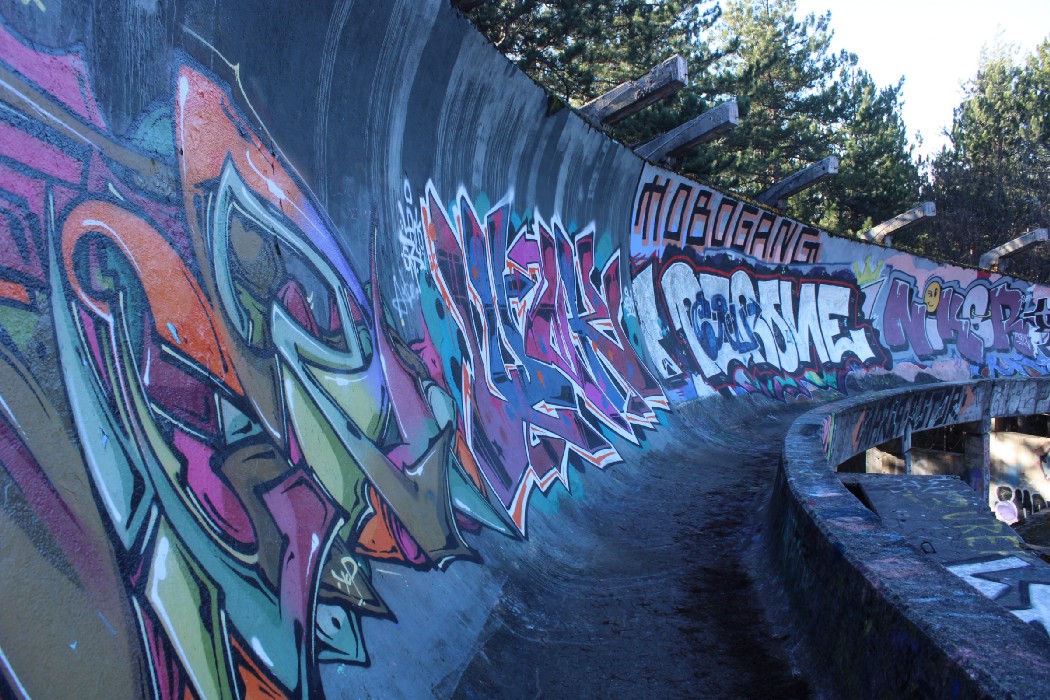
Words also stand out, especially if they are conveniently in English:

I hadn’t come to Sarajevo, or Bosnia, just to think about the civil war. Any city, and any country, are far more than the sum of a particular conflict. But it’s hard when reminders of it are everywhere, even if only in association to the war in Ukraine.
According to Valida, the proprietor of the guesthouse where I was staying, there was an observatory somewhere on the mountain — a detail that was both a pleasant suggestion for what I might look for up there, but also one which blended seamlessly into talk of the war. Her husband, only a few years before they’d met, had been stationed there as part of the city’s home-grown defenses.
“It had been so scary in those days,” she’d said. “That is why I feel so sad for the people of Kyiv. What they are going through, we went through.”
The Yugoslav wars, not just in Bosnia, but throughout much of the Balkan peninsula, were the last wars fought on European soil before the invasion of Ukraine by Russia last February, at the conclusion of another modern Olympic Games. The siege of Sarajevo, which lasted from the spring of 1992 to February of 1996, was one of the longest in the history of modern warfare. After the international community recognized Bosnia and Herzegovina as an independent country, Serbian-backed forces besieged the city. Nearly 14K people were killed during the conflict, including thousands of civilians.
The War Childhood Museum, on a quiet street just off the old town, provides a moving and heartfelt perspective on the war, through the lens of the children who lived through it. The museum was founded by Jasminko Halilovic, who’d experienced the siege of Sarajevo as a child, and who was inspired to share the stories of others like them. The collection includes hundreds of objects, donated by survivors, which represent their experiences from the time; 50 were on display at the time of my visit. Each is painfully ordinary, a symbol of everyday life horribly disrupted: a pair of Startas sneakers, a set of Legos, a favorite jacket from a relative killed in the siege.
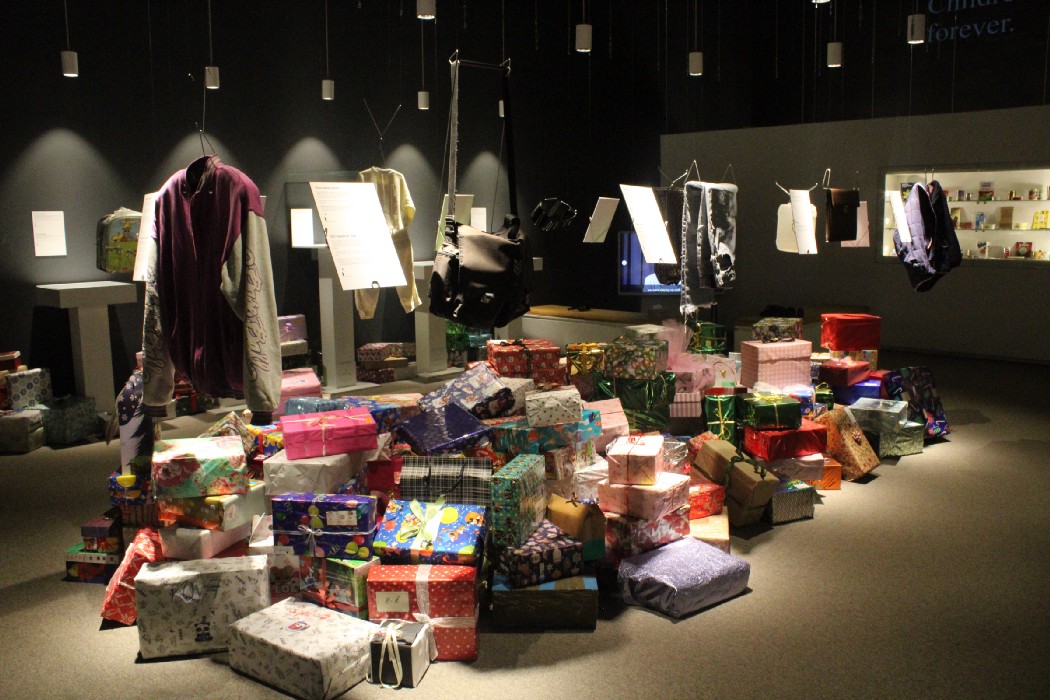
Quite a few of the objects do carry a great deal of the horror of war. Some, like the aforementioned jacket, are reminders of loved ones who were killed, including other children. Others, however, like homemade birthday cards, offer a glimmer of light into how families and communities.
The collection also includes video testimony from survivors, who provide further insight into how they, and their families, attempted to keep life going as ordinarily as possible during this time. They talk about how their mothers made New Year’s cakes out of crackers and gelatin, how neighbors gathered in the relative safety of houses and gardens, of how their parents insisted that they keep up their schooling however they could — pursuits that gave them creative and intellectual outlets that gave them an escape from reality, and allowed them to survive.
While most of the items on display were from the Bosnian civil war, and the Sarajevo siege, there were others, too, on display from the conflict from Ukraine, starting with Russia’s annexation of the Crimea in 2014 — a direct line from then to now, and a sad reminder that the cruelties of history march on.
I will have more on the war, as well as more cheerful topics, in upcoming posts.

 Robin J Kish, Writer