My visit to Sarajevo got off to a somewhat ominous start. A bomb threat occurred at the international airport, just as I was finishing up at the ATM. A suspicious package had been found in the arrivals’ hall. Soon, police had blocked off a trapezoidal perimeter around the offending object and had ushered everyone outside into the cool, evening air.
Valida, the amicable woman who runs the Halvat Guesthouse, was concerned when I told her the news. Her previous guest had just departed for the airport. “Things like that, they do not happen here.”
Things like that don’t happen often in Sarajevo, which has been relatively at peace since the Dayton Accords brought an end to the three-year civil war that ravaged Bosnia and Herzegovina from 1992 to 1995. Tensions between the country’s ethnic groups, however, began to flare up again in 2021, after political leaders of the Serbian-controlled parts of the country threatened to separate from national government entities — a threat that hasn’t yet come to pass, but which continues to simmer.
I don’t know whether the bomb threat at the airport was the result of this tension, a statement about today’s geopolitical climate as a whole, or merely a hoax. But, since it wasn’t covered by the local news, I assume that the threat, if any existed, had been neutralized.

Jetlagged and tired, I took any evening walk through Sarajevo’s old town, or Bascarsija, down to the Miljacka River. A few kilometers down I came to a place the history buff in me has wanted to see for decades: the Latin Bridge where, in 1914, Archduke Franz Ferdinand, heir to the Austrian-Hungarian throne, was assassinated, an event widely credited as starting the First World War.
Whether the assassination really started the war is a matter of historic debate. At the time, Europe was brittle with nationalistic sentiment that led just about every country to believe that a nice war would be good for the patriotic spirit. So, after Ferdinand and his wife, Sophie, were both shot by Gavrilo Princip, a Bosnian Serb and Slavic nationalist, as their motorcade traveled across the Latin Bridge, Austria-Hungary and ally Germany — itself cobbled together from the remains of the Holy Roman Empire and a new player on the world’s superpower stage — had the perfect excuse to declare war on Serbia. From there, it was just a matter of time before the remaining European powers, linked together by a complex web of treaties, all fell into the fray.

Ironically, Ferdinand and Sophie’s deaths garnered little attention in Vienna, where the initial collective response was “Meh.”
It would also be an apt way to describe Sarajevo’s reaction, if the Latin Bridge is any indication. Only a glass plaque commemorates the site’s historic significance. Otherwise, the bridge itself is very much like many of the others that span the trickling Miljacka: an arch of stone dazzling with Christmas lights.
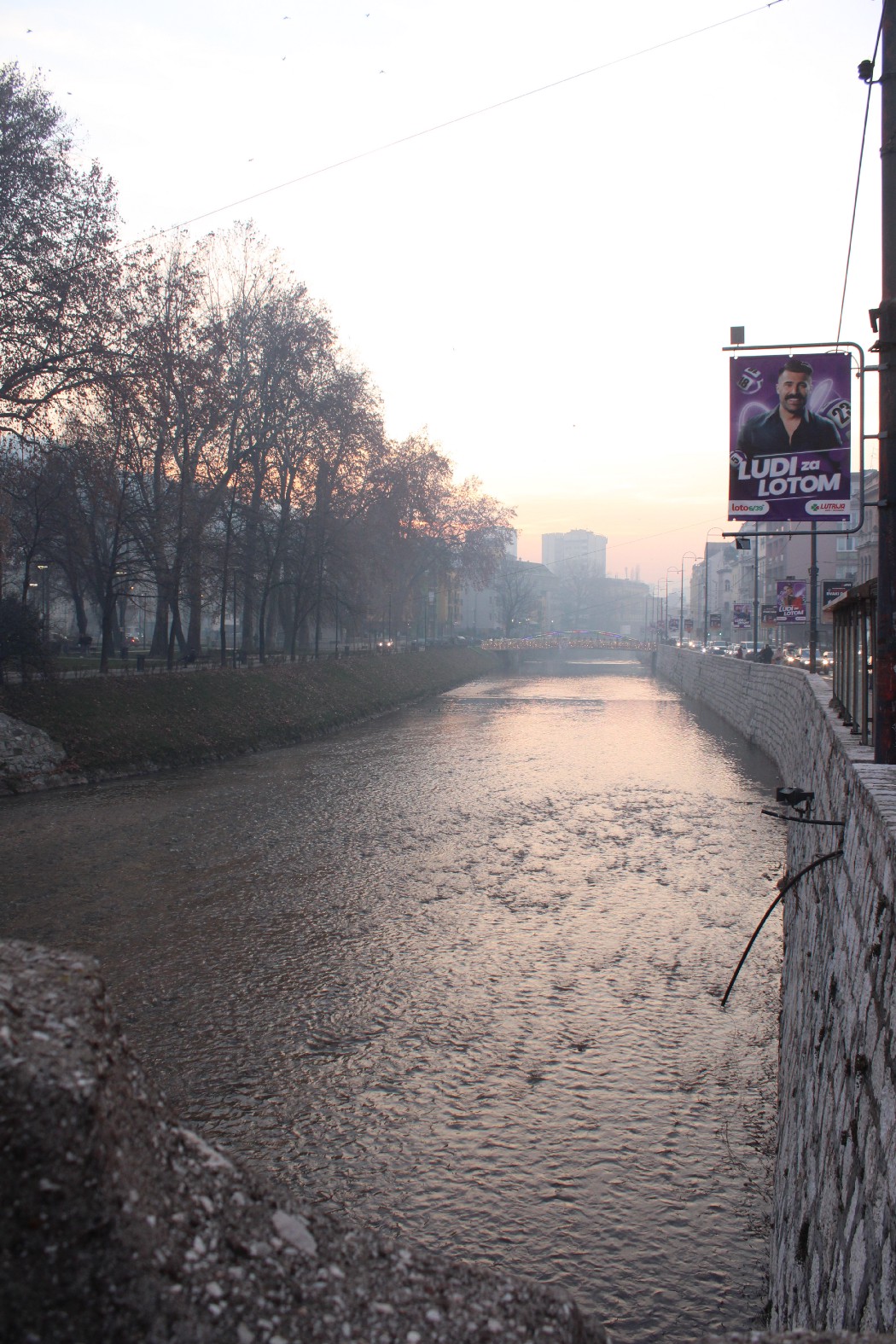
I shouldn’t have been surprised. The Latin Bridge is just a bridge, after all. And while the Great War left a huge scar on the European psyche, within the larger context of modern Bosnia, the death of two nobles over 100 years ago is hardly a blip on the radar.
At the time of the assassination, the Balkan peninsula had been something of a powder keg. The countries of Bulgaria, Greece, Montenegro and Serbia had gained their independence from Ottoman rule, but Bosnia had been annexed into the Austrian-Hungarian empire. Nationalist fervor in the independent countries sparked the Balkan Wars of the early 20th century, and calls for a unified Slavic nation from Bosnian Serbs. Gavrilo Princip had been part of this movement, and Ferdinand’s assassination had been a protest against continuing Austrian-Hungarian control of the country. By the end of the war, Princip got his wish: the Austrian-Hungary empire ceased to be and a united Yugoslavia (modern-day Bosnia, Croatia, Kosovo, Montenegro, North Macedonia, Serbia, and Slovenia) was born.
The break-up of Yugoslavia in the 1990s, a decade after the death of strongman leader Josep Broz Tito, led to renewed conflict among Bosnia’s ethnic groups. The details are far too complicated for me to go into, or even follow, but the basics are this: Bosnian Serbs wanted to remain part of a united Slavic nation while Bosnian Croatians and Bosnian Muslims did not. Bosnian Serbs, with the help of Serbia, responded by laying siege to the country — a brutal campaign of destruction, rape, and genocide that claimed around 100,000 lives and impacted millions more.
The civil war and genocide marked how much of the world saw Bosnia in the 1990s, and while the Dayton Accords ended the conflict in name, tensions continue — as they would from a civil war that ended less than 30 years ago. It’s still very much in living memory for many Bosnians.
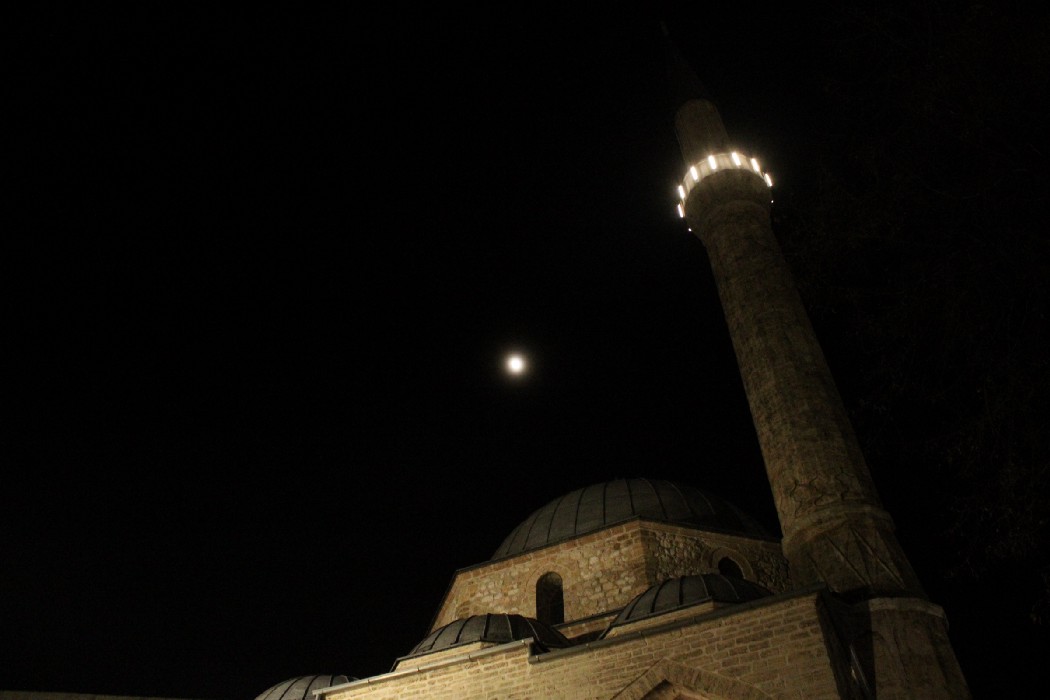
But these tensions seemed far away as I continued my walk from the Latin Bridge through the old town, teaming with Christmas lights and decorations, ice rinks and families out enjoying a pleasant New Year’s evening. Mosques were open for late-night prayers, their domes and minarets illuminated by floodlights. On the streets, men sold roasted pomegranates from carts. On the surface, at least, it was the picture of ideal balkanization: the city as melting pot, where people of differing religions and ethnicities could coexist.

Upon my return to the Latin Bridge, as I made my way back to the guesthouse, I saw an even more serene site: a gray tabby had plopped itself onto the stone wall along the river, just meters away from where Princip had fired his fatal shots. The creature was friendly and plump, likely someone’s housecat making its rounds. It purred quietly, happy to soak in the beauty of the night.


 Robin J Kish, Writer