If you’ve seen an image of Lisbon, chances are it’s of the Tower of Belem: a squat flourish of marble ornate as a candle sculpted from its own melting wax, docked along the Tejo estuary. It’s one of Lisbon’s most prominent – and photographed – symbols, and fittingly so: it was once the first line of defense for the city, a fierce and flamboyant guardian.
(This is where I would insert a picture of the tower here, but … .)
For our trip to Belem, we didn’t see the tower because we didn’t want to. Maybe our lack of interest was due to the rain. Maybe all the miniature Towers of Belem we’d passed in souvenir shop windows spoiled our appetite for the real thing. Maybe, on its own, the tower just isn’t that impressive.
The real star of Belem, on the western edges of Lisbon, is the Mosterio dos Jeronimos, a UNESCO World Heritage site designed in the same Manueline style as the Tower, except a thousand times more impressive. You also don’t see quite as many knick knack versions of Jeronimos lining the windows of Lisbon, which might add to its charms.
But before we get to the monastery, I should probably write a bit about Belem’s other famous landmark, in honor of the foodies I am traveling with: Pasteis de Belem.
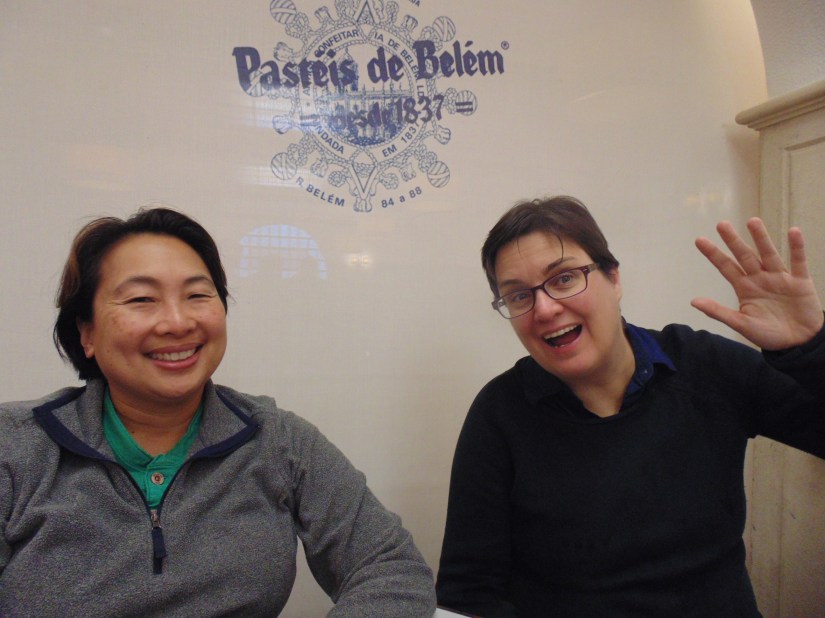
Established in 1837, Pasteis de Belem is so popular that on weekends lines for its delicacies might stretch for about three or four blocks. Back in August of 2014, when I had no choice but to visit Belem on a Sunday, the line for Pasteis had extended all the way to the monastery. Thus, I did not enjoy their famous pasteis de Belem, or custard tart, for which the cafe is so famous.
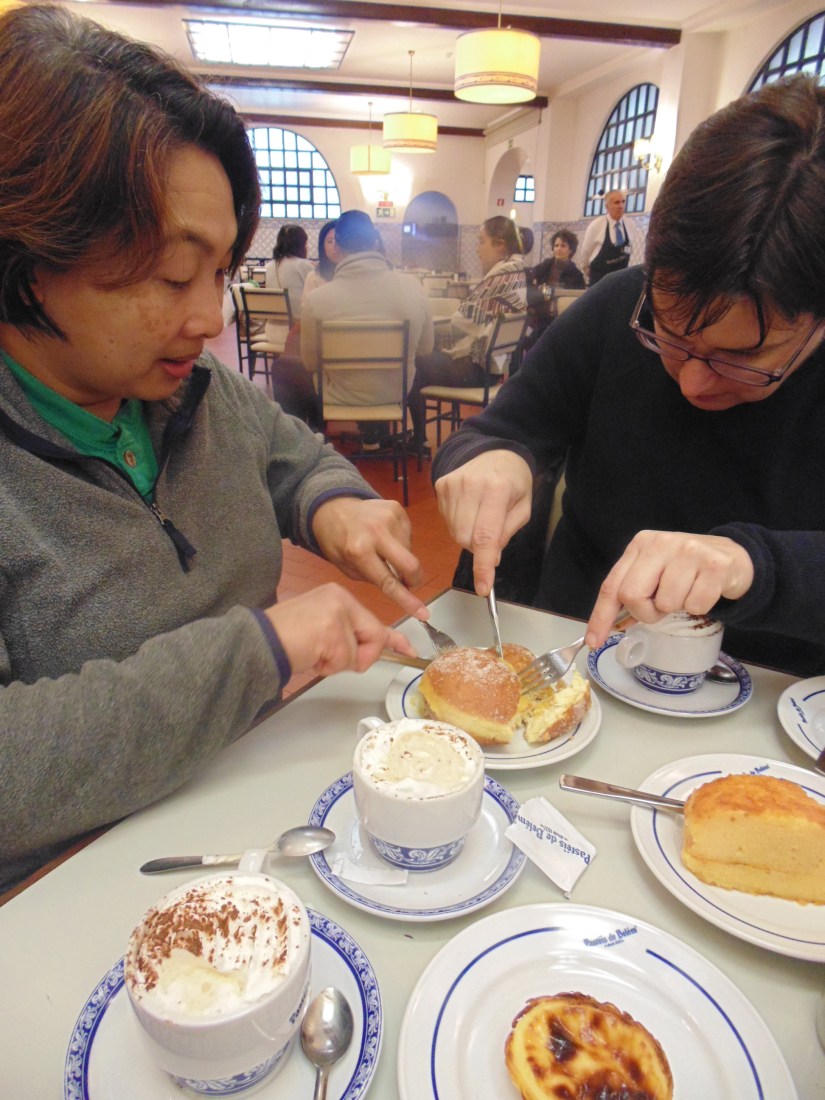
However, on a rainy Wednesday in January, tables were available for all. The cafe has a main bar, plus four rooms of tables which were nearly full by the time lunch rolled around. I went the traditional route and ordered a custard tart, although Johanna sampled something that looked and tasted like a spongy lemon cake AND something else that resembled a chocolate-gingerbread roll, while Melanie opted for a custard-plumped doughnut. (She would have ordered more goodies, but our waiter had some difficulty understanding that, although there were only three of us, we’d managed to order six pastries.)
The service was extremely slow, although our waiter was also quite friendly and helpful. Unfortunately, the notion of servers coming to your table only when you beckon them doesn’t work in a room filled with hungry and eager diners. However, the pastries and cappuccinos we ordered were delicious.
For me, the highlight of Belem is the monastery, although I do want to take a few moments here to extol the virtues of the Centro Cultural de Belem, a modern plaza that includes a (free!) modern art museum. In a city where most tourists are drawn to the past, the museum offers a refreshing glimpse into the contemporary side of Portugal’s arty side. There’s also a nice sushi restaurant in the Centro, where three years ago I had a lovely lunch with proud Lisbon natives Juliette and Julio, who tried in vain to teach me Portuguese. (“It’s easy,” Juliette insisted. I wasn’t so certain.)
But since sushi isn’t exactly exotic delicacy for Westerns, we decided to skip the Centro and instead make Jeronimos our last stop in Belem. What makes the monastery, and also the Tower of Belem, so impressive is the architecture. Both are designed in the Manueline style unique to Portugal, a fusion of European and Asian elements resulting from the country’s conquest of the seas. Essentially, Manueline architecture looks a bit like what I described before, a candle ornately sculpted by its own melting wax (which is about as “technical” as I can get when it comes to describing architecture). The designs of this ornate carving were inspired also by Portugal’s seafaring adventures. Columns thick as redwoods and arches are vined by sailors’ ropes, while exotic beasts peer out from just about every available space.
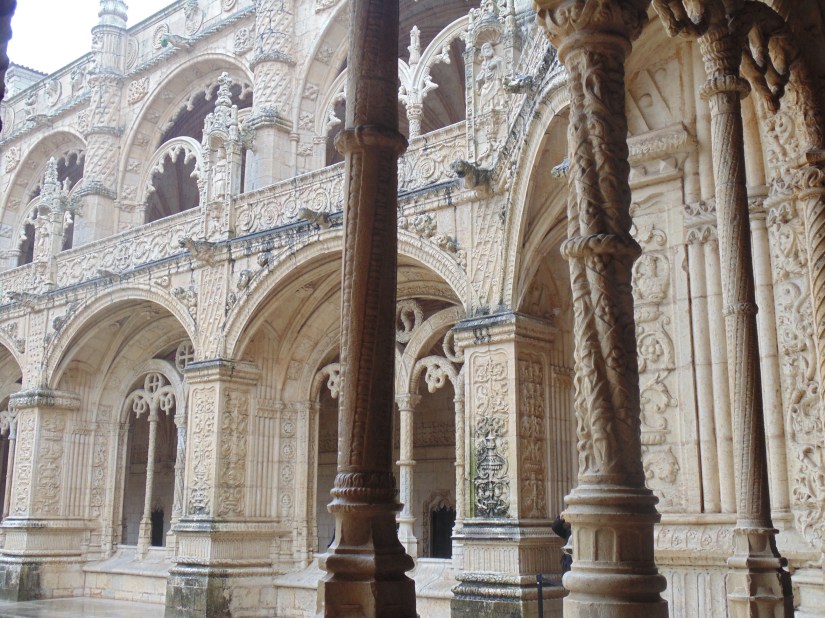
Jeronimos was founded in … okay, I won’t go into the history since most people visit just to see the spectacular architecture. Under blue skies, the monastery is truly breathtaking, and I’m afraid words can’t do it justice (therefore, see pictures, below).

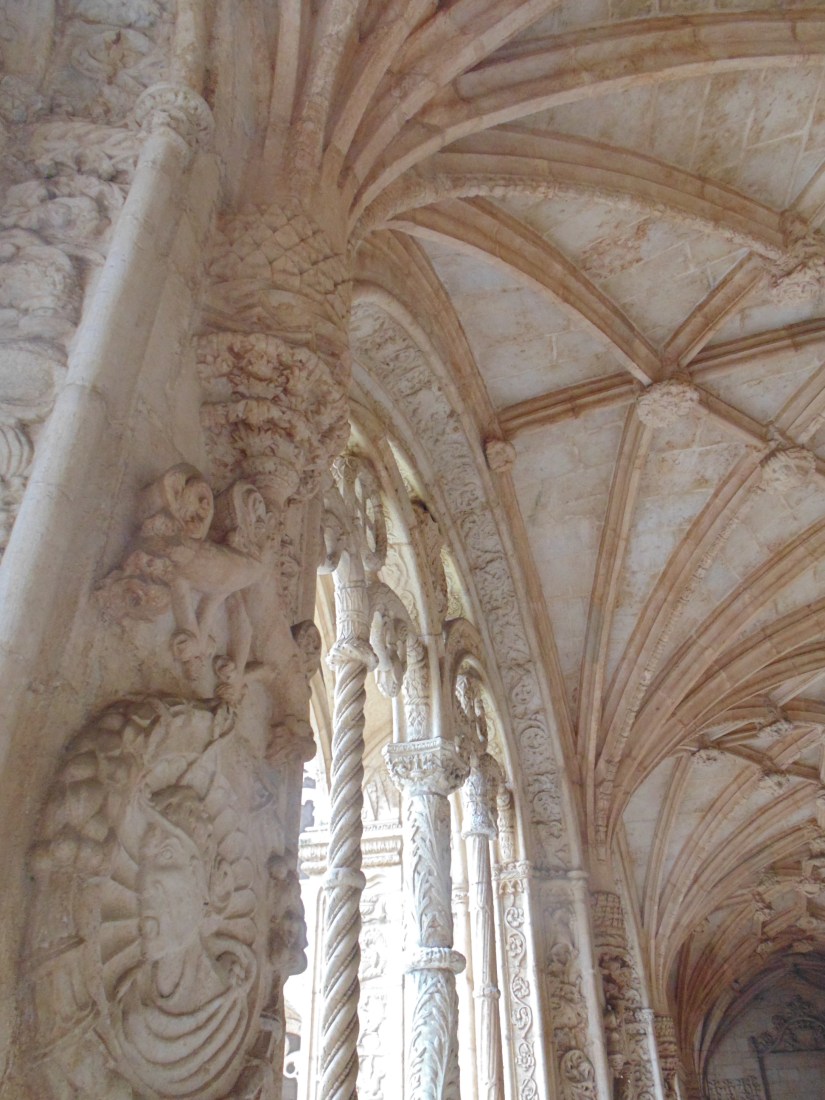

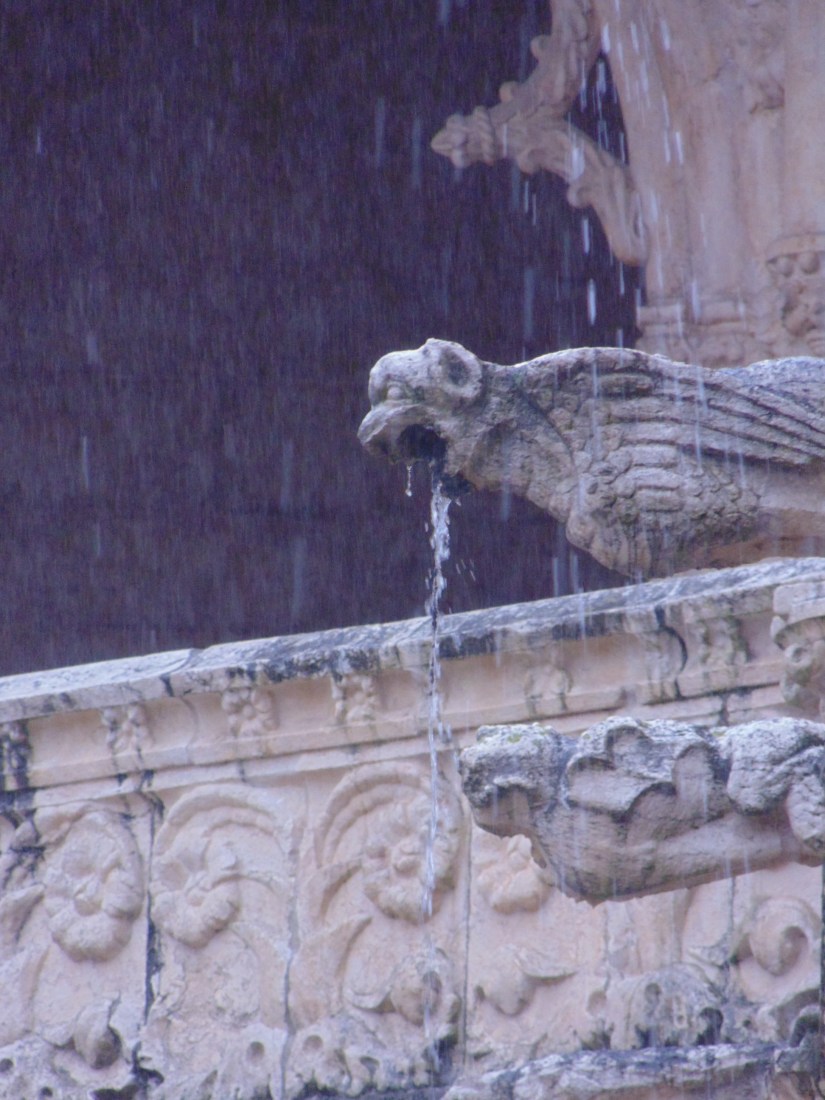
The rain, however, has its own magic, turning gargoyles into spontaneous fountains.
–


Stay tuned for my next post, which will not feature quite so many drooling gargoyles.

 Robin J Kish, Writer